I do not really seek out new releases at this point, unless they look really intriguing or I’m inebriated on the internet. For many years I had access to the Naxos press portal (!), and as a result I have more music than I can listen to in three lifetimes. I spend most of my time now either trying to catch up with the myriad still-zipped files, or else searching for older and/or obscure releases on Soulseek or Youtube.
While it is true most of the composers from the places and time periods I am most interested in do not get a lot of attention from record labels c. 2025 (if they ever did), I did acquire a bunch of keepers this year…
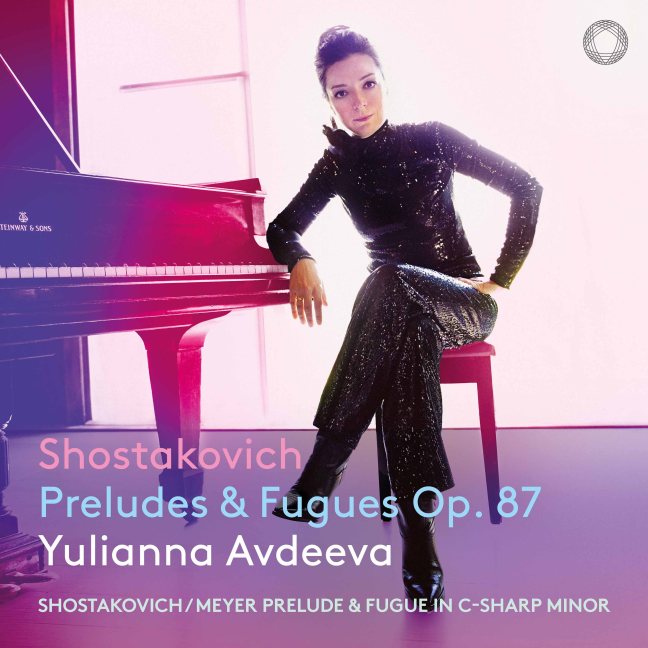
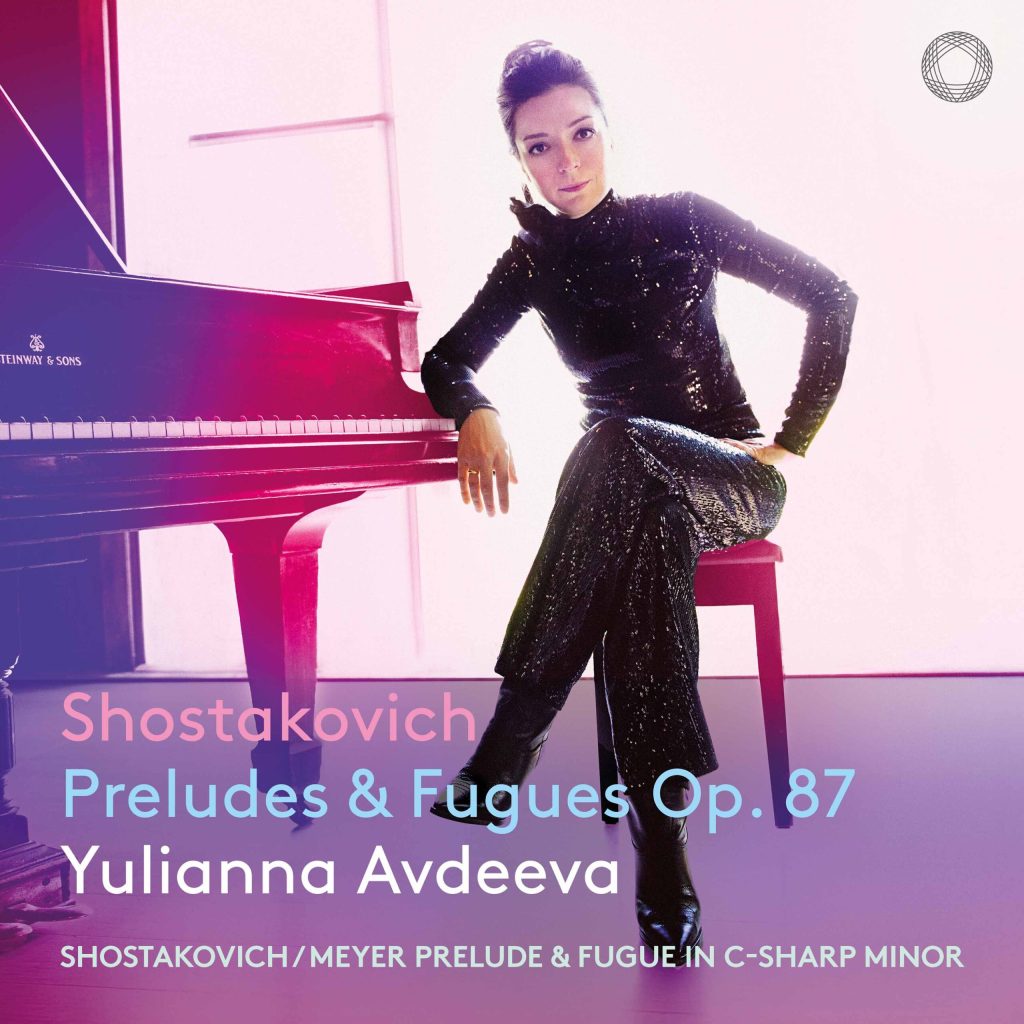
0:00:16 Dmitri Shostakovich (1906-1975): Preludes and Fugues, Op. 87; Prelude in C-sharp minor Yuliana Avdeeva Pentatone
Seeing Avdeeva play the full 2-hour Op. 87 preludes and fugues in Leipzig, E. Germany, was, in retrospect, one of the greatest things I have ever seen in my life. I say “in retrospect” because I didn’t think it was particularly mind-blowing when I saw it… Sure, it was a great artistic and athletic performance, but my mind was not blown open. Listening on repeat to her recording since I got back from Germany, though, has blown it open.
I was glad to see the reviews in the classical music press confirmed my thinking that Yuliana Avdeeva, a former Chopin Award winner, is on the highest plane with Shostakovich.
This prelude is an “outtake,” one Shostakovich discarded when he wrote another in that key that he liked better. Except, I like this one better. It is a world premiere recording of this version, rescued and tuned up by the fine Polish composer Krzysztof Meyer.
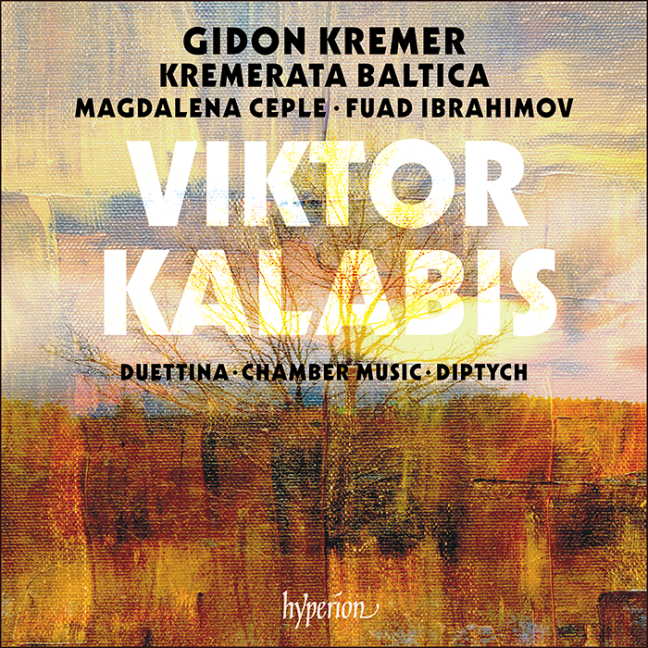
0:02:58 Viktor Kalabis (1923-2006): Duettina for violin and cello, Op 67 (1987) Gidon Kremer (v) & Magdalena Ceple (c) Hyperion
Gidon Kremer’s latest effort to keep the name of an excellent mid-century composer alive. The Czech Viktor Kalabis, or his ghost, is the beneficiary this time around. A fine chamber music album, assuming you like thorny and not super-melodic Bartok…
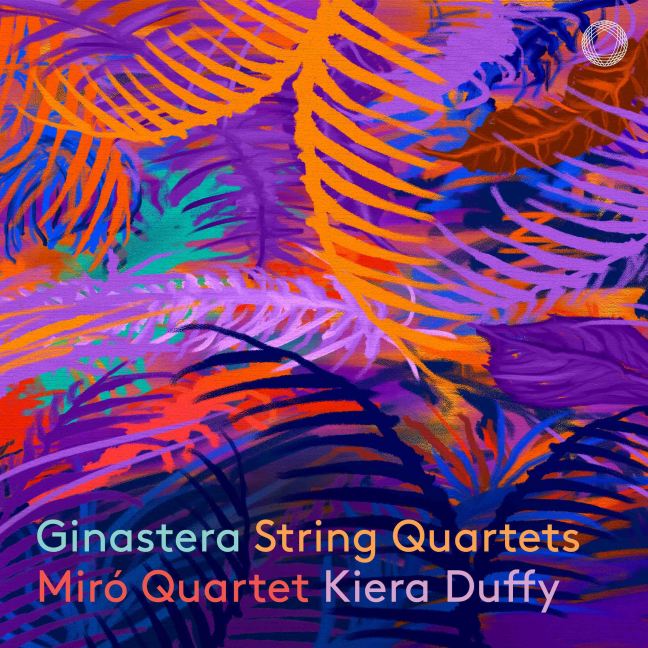
0:05:33 Alberto Ginastera (1916-1983): String Quartet No. 2, Op. 26 – I. Allegro Rustica Miró Quartet Pentatone
This collection reminded me of why I need to listen to more Ginastera and to more music from Argentina in general. Which I started doing right away, thanks in large part to the Transylvania County Library’s fall book sale.
I have shows of Argentine and Uruguayan composers set for this winter.
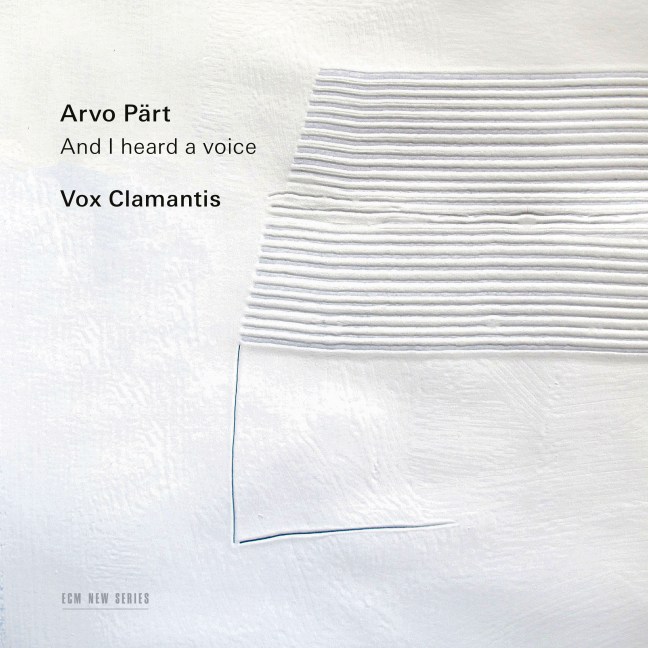
0:11:37 Arvo Part (1935- ): Für Jan van Eyck (2020) Jan-Eik Tulve: Vox Clamantis ECM New Series
There is no way this record could not have been great: longtime Part collaborators (and fellow Estonians) Vox Clamantis + ECM New series engineering + a bunch of excellent 21st C. Part works.
This is the only track with accompaniment (organ) and dates from a sexacentennial celebration of Van Eyck’s paintings in Ghent back in 2020.
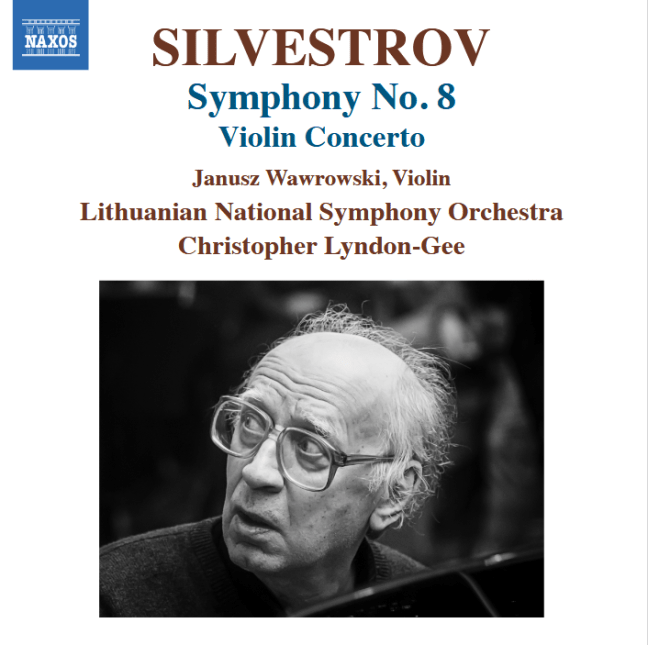
0:16:23 Valentin Silvestrov (1937- ): Symphony No. 8 (2012-3); I. Andantino – Adagio – Più mosso Christopher Lyndon-Gee: Lithuanian National CO Naxos
2025 was the year I finally “got it” with Silvestrov and this Naxos album was the gateway. He wrote a lot of music like this symphony, which I did not know. He’s a heavyweight.
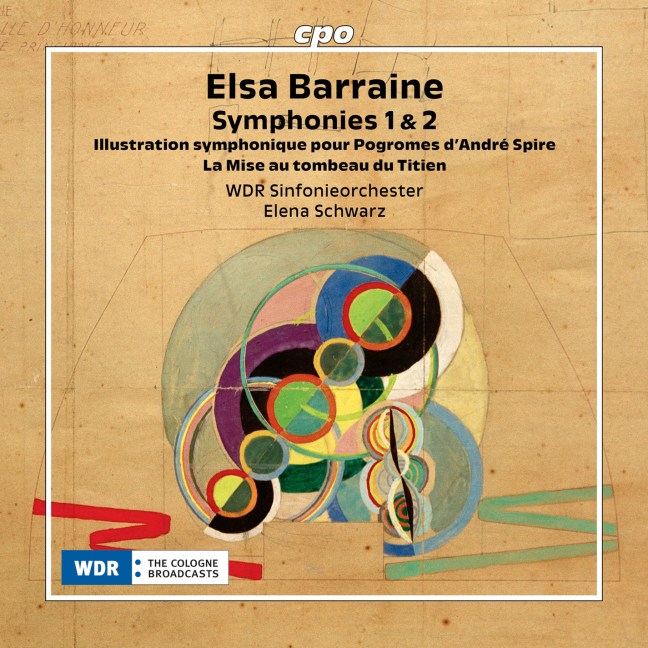
0:21:14 Elsa Barraine (1910-1999): Musique funèbre pour la mise au tombeau du Titien (1937) Elena Schwarz: WDR Symphony Orchestra Köln CPO
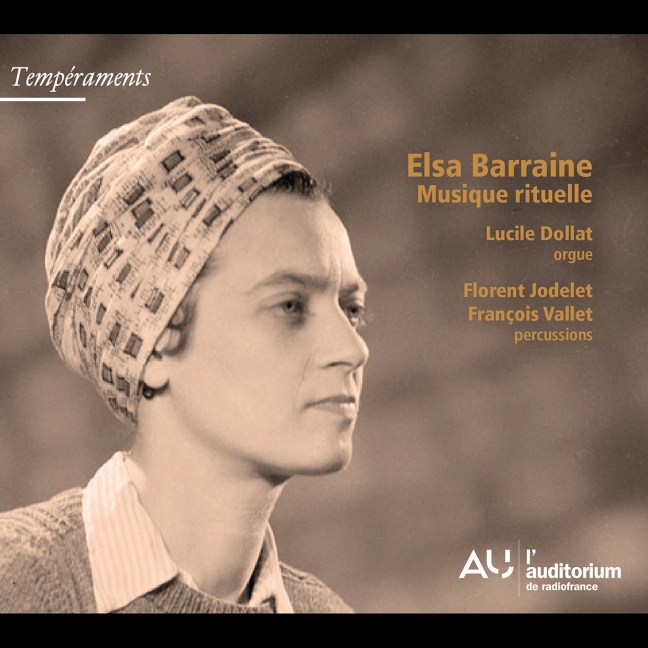
I had never heard of Elsa Barraine until I came upon this record and an album of organ music later in this program. Elsa Barraine was a student of Paul Dukas, with Messiaen as a classmate, and an important teacher and arts administrator in the second half of her life. She was also a heroic public figure in mid-century France, openly confronting the Nazi takeover of her country much longer than most courageous people would deem wise – and doing so despite having half-Jewish parentage. She was forced to go underground in the end.
What she was also was an insanely good composer. Not, “oh-look-another-overlooked-woman-composer”-good. This piece was written in ‘37 and is as good as it gets, 1930s-wise. Wikipedia lists many more works than seem to have been recorded. I’m praying more is discovered and that more gets recorded before I die. Like my other (late but not too late) big discovery of 2025, Lisa Streich, Barraine is one of those composers I feel extremely lucky to have met up with before I die.
And there’s a Youtube channel with most of what’s been recorded (or performed lately) here: https://www.youtube.com/@Ewyr
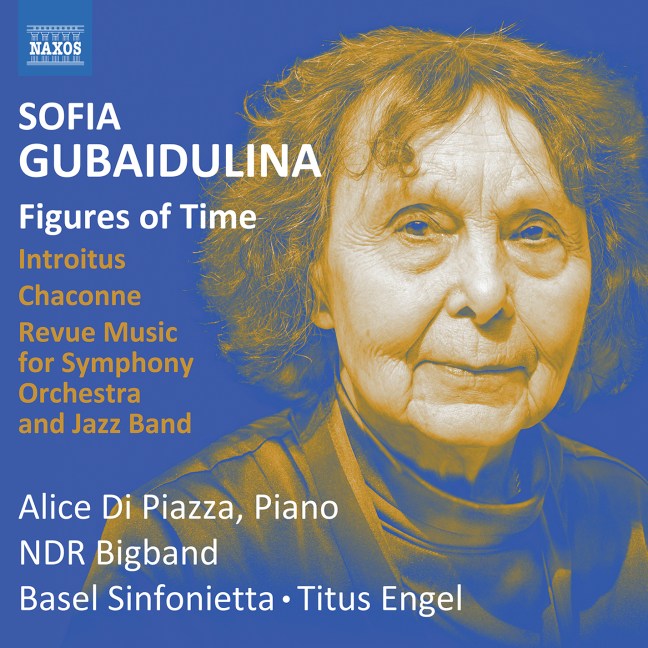
0:38:06 Sofia Gubaidulina (1931-2025): Figures of Time (1994) (excerpt) Titus Engel: Basel Sinfonietta Naxos
This September release was a nice wave goodbye to Gubaidulina, who died in March. It also contains, oddly, the world premiere of the title piece, which premiered back in ‘94 to considerable acclaim. 30 years? Not sure how that could have happened with a composer of Gubaidulina’s stature. Figures of Time is in hodge-podgy movements so I chose several to excerpt here.
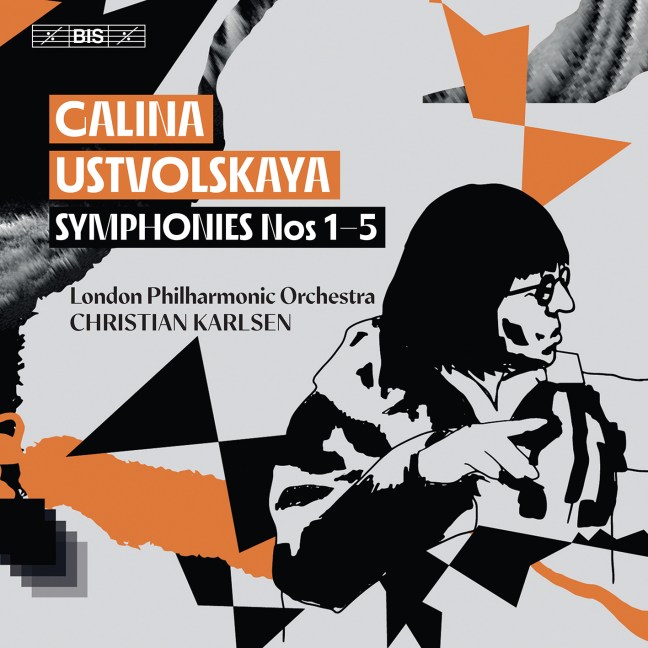
0:31:17 Galina Ustvolskaya (1916-2001): Symphony No. 4, “Prayer” (1985-7) Christian Karlsen: members of the London Symphony Orchestra BIS
Finally,a single disc containing all five of Ustvolskaya’s symphonies in earwhisker-searing sound and anguished (in terms of vocal parts, maybe a tad over-anguished…) performances. Part of what makes this interesting for the Ustvolskaya cult (of which I am in the drill team) is hearing what an English orchestra and Danish conductor would do with them. (Reinbert de Leeuw led many great Ustvolskaya performances and recordings with the non-Russian ASKO/ Schönberg Ensemble, but that’s Reinbert de Leeuw.) It’s strange hearing the Ustvolskaya symphonies with such crystal-clear high-end sound. The cube, in particular, sounds really, really good. I won’t get rid of my Oleg Malov discs with the various symphonies on them, but I definitely won’t get rid of this one either.
The cover art, though? Uhhh…?
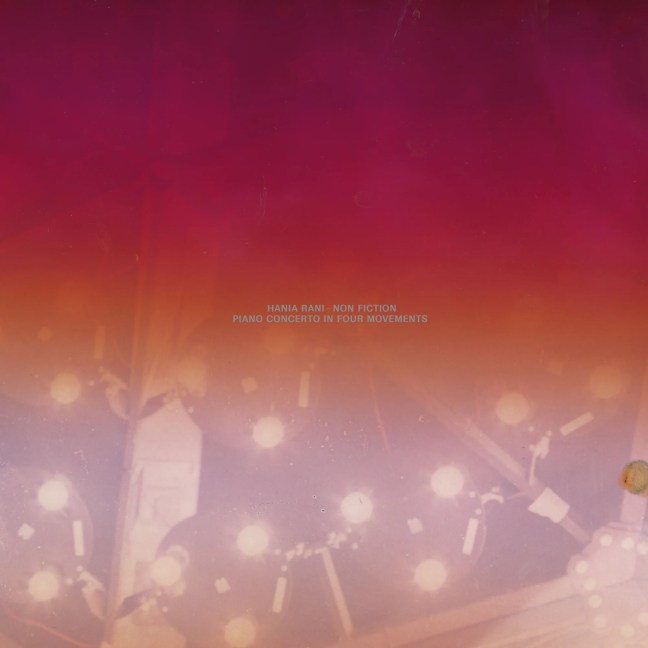
0:52:50 Hania Rani (1990- ): Non Fiction: I. Sonore – Animato – Meno Mosso Hania Rani w/ Manchester Collective Deutsche Grammophon
I listened to Hania Rani’s four-movement piano concerto without knowing what it was and liked it so much through the car speakers that I pulled over to check what it was. I have mixed feelings about her, mostly about the pop-ish music on which she sings, but I really enjoyed her lengthy duets with cellist Dobrawa Czocher on an earlier DG release – “minimalist” in the Simon Ten Holt-sense more than the American calliope music-sense. This piano concerto answers the question of what Hania Rani might sound like with a full orchestra: her piano often gets lost in the mix BUT the mix is really fun, a whirling wash of sounds. I think it’s safe to say Hania Rani is or was a Radiohead fan…
Better she the “face” or “future of classical music” than Muzak Max Richter, I’d say.
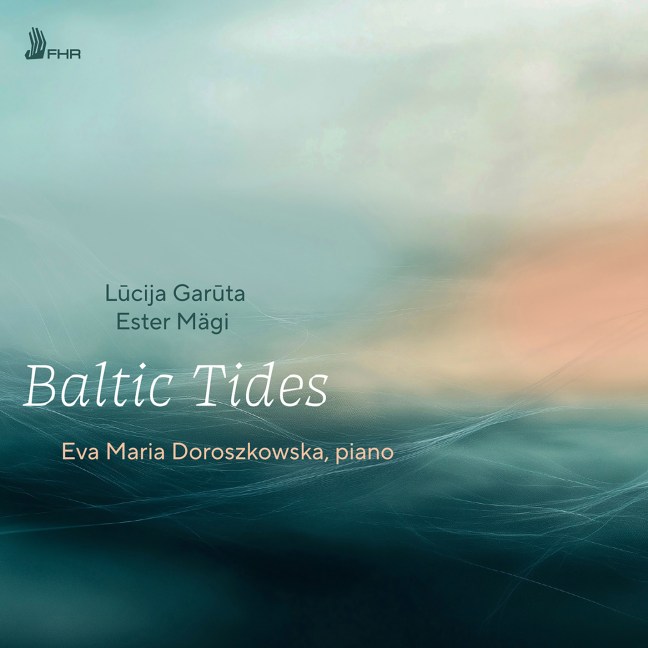
1:02:07 Lūcija Garūta (1902-1977): Etudes for the Sostenuto Pedal; I. Seru melodija Eva Maria Doroszkowska First Hand Records
A couple years ago, I had much better access to new releases from a wide array of small labels through the Naxos distributorship. Not anymore, which is too bad because I miss out on a lot of records like this one. Small labels do important work, putting out music by un- and lesser-known composers. E.g., this one. Garuta authored an incredible war-time antiwar cantata and is a highly-revered figure in Latvian classical music, much as is Ester Magi in Estonia, but in the wider world c. 2025 pretty much unknown/forgotten. That’s life – artists fade off into oblivion just like everyone else…
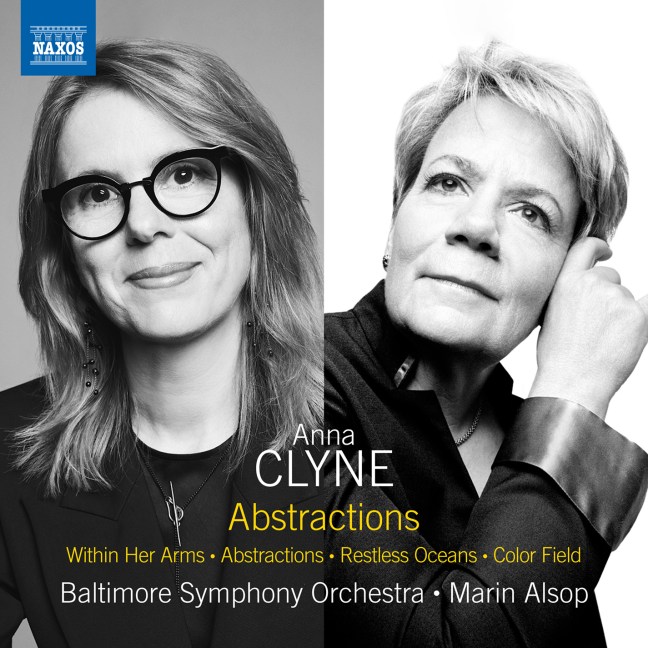
1:05:59 Anna Clyne (1980- ): Color Field; III. Orange Marin Alsop: Naxos
Anna Clyne seems to be, along with her countryman Adès, one of a very small group of contemporary composers who can write music that appeals to adventurous listeners and the Mozart/Brahms/Tchaikovsky crowd alike. Most of my listening these days leans more Anna Thorvadsdottir than Anna Clyne, but this album is a fine and necessary compendium of Clyne works. Within Her Arms and Color Field are two of her best.
I do really think ANYONE could like this music. Better Anna Clyne the face of mainstream classical music than Easy Einovaudi-whatever-the-hell his name is.
(The “Incredible Two-headed Transplant” cover art, meanwhile, might take Worst-of-the-Year honors if not for the Ustvolskaya set’s cover. One of Clyne’s paintings – which are excellent, I think – would have been MUCH better.)
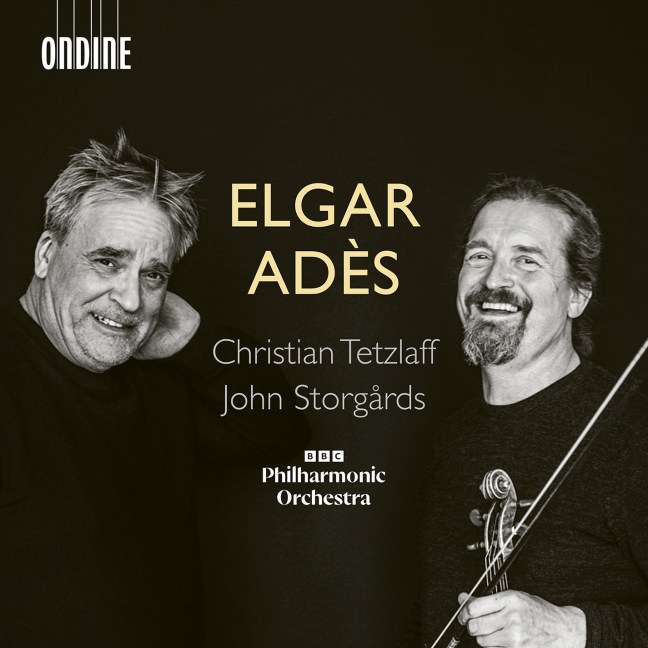
1:10:51 Thomas Adès (1971- ): Concentric Paths; II. Paths Christian Tetzlaff w/ John Storgårds: BBC Philharmonic Ondine
Not one but two excellent recordings of Thomas Adès violin concerto this year, which, along with three excellent previous recordings, suggest that this concerto has entered the pantheon. Which it should: It is extremely catchy while still being skewed enough to tweak my twisted dopamine dispense system. It is my favorite orchestral work in Adès’s output to date, along with the early Asyla, and I consider myself a fan of his. Leila Josefowicz did the other excellent one this year, with the Minnesota Orchestra for Pentatone. Perhaps I’m biased, having seen Christian Tetzlaff SLAY the Shostakovich second concerto in person a few years ago, but it seems he has a vibe with dark music that few contemporaries possess. And he has a 5-year history with the BBC orchestra and this piece. He takes Adès right into Shostakovich violin concerto territory, which is to say darrrrrk. So maybe I give him the nod.
(OK, I just listened to the Josefowicz and the Tetzlaff versions back to back and I can not honestly say one’s better than the other… But there’s already three Pentatone records on this list, so that gives Tetzlaff the nod here.)
I also have to admit I liked the Elgar violin concerto that makes up the first half of the Tetzlaff disc a bit more than I liked the Exterminating Angel Suite (music drawn from Adès’s recent hit opera, based on the Luis Bunuel claustro-classic) on the Pentatone disc, though that might change with more listens to the latter. I have not heard other versions of the Elgar concerto, but Gramophone thought this version is brilliant and I trust them on British stuff, as half their ration d’etre is to overinflate the significance of British music. Excellent, insightful interview with Tetzlaff about the two concertos in the liner notes.
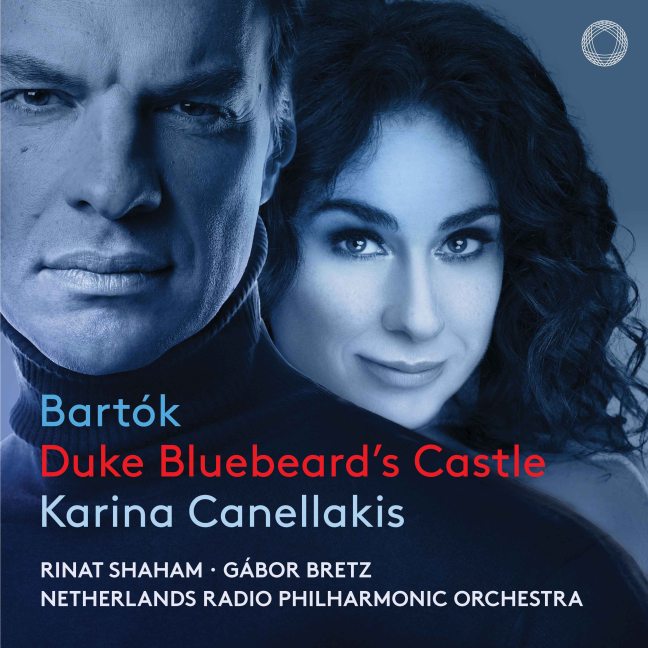
1:21:16 Béla Bartók (1881-1945): Duke Bluebeard’s Castle, Sz. 48 (1911): The Fifth Door Gábor Bretz & Rinat Shaham w/ Karina Canellakis: Netherlands Radio PO Pentatone
This is the best opera ever – Symbolist/minimalist plot, two deep-voiced actors in a life-and-death situation, and only an hour long. Bluebeard’s Castle has, to me, some of the best orchestral music Bartok wrote along with Music for Percussion, Celesta and Strings and the Asheville-composed Concerto for Orchestra. The singers here, a Hungarian bass baritone and an Israeli mezzo soprano, are forceful and dark. The rising-star conductor is touring the opera around Europe next spring.
The title piece, Musique Rituelle, is a 37-minute trio for organ and percussion revolving around the Tibetan Book of the Dead that has cracked my All Time Top Ten Favorite Compositions list. The version of it on this 2025 release has the organ a lot more up-front than an older version with Barraine’s friend Raffi Ourgandjian on the keys. I think I prefer the older version, but this is great and the old one seems to be impossible to find, though you can hear it on the Youtube channel linked above.
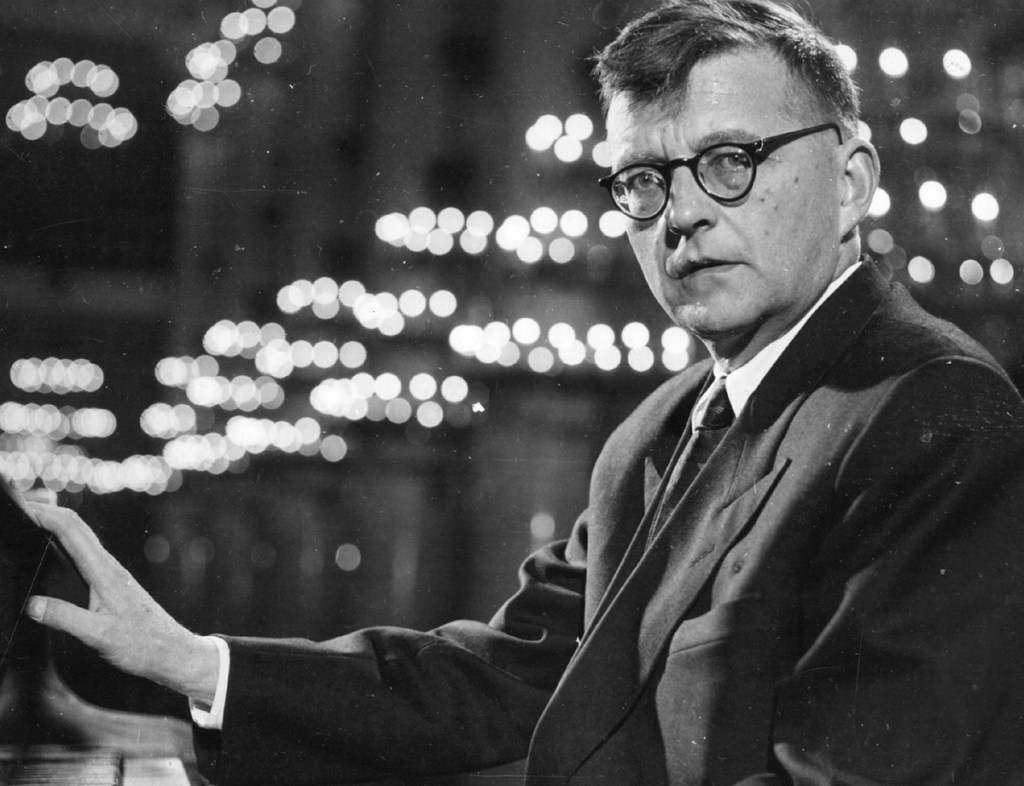
Dmitri Shostakovich (1906-1975): ‘When a man is in despair, it means that he still believes in something.’
Dmitri Shostakovich was, to my mind, the greatest European (that includes Europe’s obese and knuckle-dragging offspring, the U.S.A. and Australia) artist of the 20th century in any genre except maybe literature. (I’m a slow reader.) The first 75% of that mostly horrific and absurd (like all of human history) century is mirrored in his best work, to an extent no other non-literary artist I know of could match. Which makes sense, since Shostakovich, in St. Petersburg-to-Leningrad, USSR, lived in a “ground zero”, through periods of hope and optimism (a revolution that ousted a decadent and corrupt ruling class) followed by grinding decades of soul-crushing horror (Stalin’s mass-murderous “Terror”, the Nazi assault that left 30 million of his countrymen dead…) Profound events that affected, to the core, a profound genius.
Beyond that, of course, is the undefinable. Suffice it to say that when I started listening in earnest to Shostakovich’s music ten years ago, it resonated to my core, in a way that few, if any, musicians had before. When we listen to music – seriously listen – I think we are searching for that sort of resonance, right? And I found mine. To the extent that if I happen to read about a composer dissing Shostakovich – Boulez, say – that composer is instantly dead to me, and a precision hard drive purge ensues.
Every review of anything is little more than a reflection of the reviewer’s biases – I am merely laying mine out here.
That established, there is a lot of his music I don’t like. That includes the two piano concertos and most of his symphonies. Until recently, there were only two of the fifteen symphonies I truly loved. Generally speaking, I don’t really like symphonies by anybody. Symphonies usually appeal to a lower common denominator than most good composers’ chamber music. They are big and bombastic and, to me, pretty dull. I would never turn down a chance to see a Mahler symphony live (when you can see how weird they are), but aside from Alfred Schnittke and Galina Ustvolskaya (if you are willing to call her symphonies symphonies), there are NO composers whose complete symphony cycles I need to own or would listen to willingly.
While Shostakovich’s pre-Stalin symphonies (1-4) took formal risks given the time frame, they are generally too… perky for my more mordant tastes. The Shostakovich music I deeply love, whether chamber or orchestral or vocal, all dates from WWII and beyond, and most of it post-Stalin (‘53 and beyond). My favorite Shostakovich instrumental symphony is, by a mile, the 11th from 1956. It is only very rarely performed in the U.S., but I lucked out once and got to see it played in Seattle with Ludovic Morlot conducting, one of the best things I’ve ever seen/heard. My other favorite is his 14th. It’s a song cycle, really, setting to music eleven poems on the subject of death by poets like Apollinaire and Lorca. It calls for a soprano and a bass and a small ensemble of 19 strings and two percussionists, and the music is often jagged and oblique. It isnever performed in the United States, at least not in the 7 or 8 years I’ve been checking. (The 5th, 7th, 10th and 15th turn up on American schedules, but that’s it…) And so at some point a few years ago, I made an idle promise to myself that if I ever learned of a performance by a top-notch ensemble with enough heads-up to get a good seat, I would go.
The Latvian conductor Andris Nelsons called my bluff. Nelsons is probably Shostakovich’s greatest champion today, certainly among non-Russian music directors. He is like the Bernard Haitink of the present day, and, like Haitink, approaches Shostakovich as a universal composer rather than a distinctly Russian one. Haitink is the one who got me to realize the validity of a more nuanced, less emotional approach to Shostakovich, vis-a-vis the more intensely emotional native Russian approach. After all, Shostakovich loved Beethoven and Mahler as much as the next guy. It is this approach Nelsons – perhaps necessarily, as a non-Russian – takes, and he is similarly successful with it.
After completing a nearly-thorough survey of Shostakovich’s orchestral music – all 15 symphonies and six concertos along with the opera, Lady Macbeth of the Mtsensk District – for the Deutsche Grammophon label with his Boston Symphony, undertook, along with several people he would thank profusely in his closing address to the crowd, to present a ridiculously-thorough two-point-five-week-long festival of Shostakovich’s music to celebrate (if that’s the word) the 50th anniversary of his death. Nelsons, who is also conductor of Leipzig’s legendary (I know now) Gewandhaus Orchestra, and he chose Leipzig for the site. (Very difficult to imagine such a project creating excitement in the U.S…) He chose a lot of close acquaintances and people with Leipzig ties – and stellar choices, all – to fill a very full docket of orchestral and chamber music.
Parsing the schedule on-line back in the horror-tinged gloom of midwinter (as opposed to the horror-tinged gloom of now), I deduced that, were I willing to shell out what would be for me an ungodly amount of money, I could see in the course of four days that elusive 14th symphony along with the 13th (“Babi Yar”, which I was pretty sure I liked but needed confirmation…), four of my five favorite string quartets (4, 7, 10 & 12) performed by the superlative Danel Quartet, my favorite of the six concertos (the second violin, with Baiba Skride as soloist) AND the Lady Macbeth of the Mtsensk District opera, as well as a bunch of “important” works that I am supposed to like but which had til-then proved elusive (the 10th symphony, the 14th and 15th string quartets, and the Preludes and Fugues, Op. 87.) After much hemming and hawing, it finally proved too good a proposition to decline. It was, as my son-in-law suggested, “some bucket-list shit.”
Yes, it was a lot of money, but my reasoning was, human civilization is nearly over and what’ll that money be worth then? So I bought tickets, a pair of Tommy Hilfiger slacks ($5.99 at the Goodwill), a nice windbreaker without apparent stains ($6.99), a Type C power adapter and a 6-pack of Dickies socks and headed on over.
____________________ Wednesday, May 28
This was the first time I’d ever been to Europe on vacation (I’d made a few trips as a member of punk bands, which is not really a vacation since there is little or no free time to wander AND there were sympathetic people waiting for us), and my first time there at all since 2007.
Immediately upon stepping outside the train station in Leipzig, I was whacked with that realization I’d experienced on every previous trip, that the United States is so much closer to a Third World country than a First. Like every other decent-sized European city I’ve been to (and I went to many on those tours), Leipzig’s center is a clean, well-organized place with gleaming public transit, no apparent homeless problem, and roads without potholes or trash. While East Germany had a much tougher Cold War than West – and still trails ex-West by all economic measures – you’d hardly know it from the square mile of Leipzig’s city center.
Those big moats around the U.S. that have spared the country military invasion (til now, at least) have a major downside: If more Americans were able to visit almost any Western or even Eastern European nation, they’d recognize that we live in a shithole and – maybe – they would vote accordingly. Although you can never underestimate the propaganda power of “FOX and Friends” or the dulcet promises emanating like bubble farts from the sexdoll mouth of our imbecilic conman-in-chief.
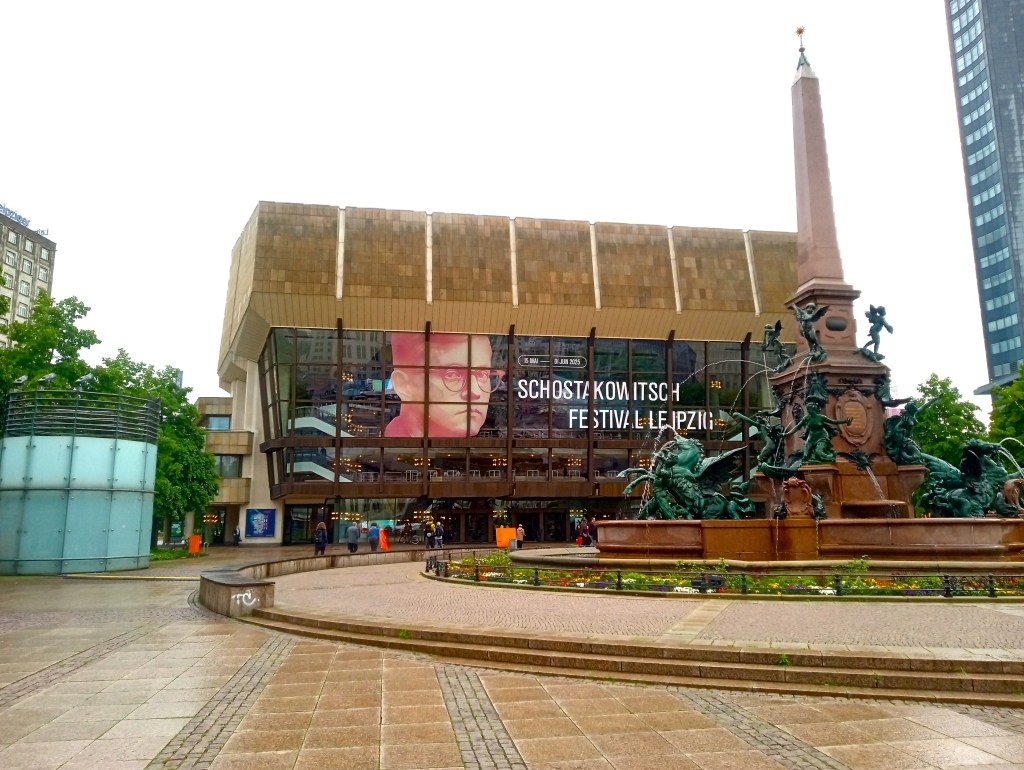
I passed the Gewendhaus complex on the walk to my 45 euro-per-night Airbnb. A huge modernist glassy structure, it had a 20-ft.high banner announcing the Shostakovich festival hanging left front. While the logo and color scheme for the festival emblazoned on the banner – a portrait of someone who looks like a miscast actor playing Shostakovich in pale greens and pinks – was not to my tastes (thankfully, as it would preclude any compulsion to buy souvenirs), the sheer size of the banner sent a shiver down my spine. I was home.
First up, though, I had to find that Airbnb and get a nappy-nap, as the 22-hour trip (three planes and a train) had kicked my ass.
19.30 Uhr Violin Concerto No. 2 in C-sharp minor, Op. 129 (1967) Symphony No. 13 in B minor, “Babi Yar” (1962) Andris Nelsons: members of the Gewendhuas and MDR Radio Orchstra Members of the Gewendhaus Choir Baiba Skride (violin) Günther Groissböck (bass)
The Gewendhaus itself (the third incarnation of the Gewendhaus, that is), which sits on the eastern edge of the city center, is an architectural marvel both inside and out. While I tend to favor older buildings for the “vibe”, this was the finest concert hall I’ve ever been in by a long shot. I would say that based on the lobby alone – a zig-zaggy maze of Escher-like uniform-width stairways – but the theater itself is like the Platonic ideal of a concert hall. Large enough to hold a big crowd but intimate and cozy, with (as you’d expect in Germany) perfect acoustics.
This program actually began with a gentleman, Michael Schonheitt, playing the aria from Lady Macbeth on the enormous pipe organ that sits behind the Gewenhaud stage. I had no idea what was going on because I hadn’t read the program, and while that aria is interwoven with my DNA at this point, I did not recognize the melody coming out of that massive organ. But it was thrilling music nonetheless. There is definitely something to be said for big organs.
Getting to see one of my favorite violinists, Nelsons’s fellow Latvian Baiba Skride (fresh off a recording of Gubaidulina’s third violin concerto), playing my favorite violin concerto of all time was definitely a factor in my decision to go. I’d seen Christian Tetzlaff play the second violin concerto with the Minnesota Orchestra the weekend before Covid and I wasn’t 100% sure if Skride, formidable as she is, could match that. (Tetzlaf’s set of the two concertos on Ondine is, to me, the sine qua non.)
I’d bought tickets for this one in the left section of the second row, so I would be close to Skride and Nelsons. When I used to go to rock shows in clubs and theaters, I almost always got as close to the stage as possible. I try to do the same for classical concerts. And it’s a plus that for most large-venue, full orchestra events, tickets in the front six or so rows of the theater are a lot cheaper than seats a few rows back. I guess the idea is you can’t hear as well in such close proximity to one section of the orchestra, or maybe that you can’t see the rear of the orchestra. Oh well! Nelsons and Skride were maybe eight feet away from me, and it was fucking awesome.
Reviews of Skride’s DG set with Nelsons and Boston have been unusually (for Skride) tepid, though critics have said her second is better than her first. I don’t know… I haven’t heard them. Live, her second was different, certainly, less angsty than many, perhaps more feminine, but it was an entirely compelling reading, I thought from eight feet away. However it may come off on disc, it was beautiful live, and she and Nelsons were clearly locked in to the same wavelength.
The intermissions at this festival were longgggggggggggggggg, like a half-hour long. I was, of course, totally out of my element – not a problem, as I am out of my element with humans in general. Much of the crowd – and all seven shows I saw were sold-out or nearly so – was very rich, and my disguise (the Hilfiger slacks and the nice jacket that turned out to have a few seams needing mending) fooled no one. And then there were the Shostakovich junkies (like me), easy to spot because (like me) they were wandering around alone or because they were Japanese or Chinese. There was one weird dude wandering around with a reusable Vancouver bus route shopping bag, but he had to have seen my Calgary Flames ballcap before I saw his tote and he opted not to engage, which was fine with me.
The main thing I noticed about the crowd was there were probably 1000% more younger people (early thirties and below) than you find in American crowds. Classical music is actually a living art form in Germany. There were teenagers and twenty-somethings on dates here.
The concert’s second half was the 13th symphony from 1962, known as “Babi Yar” from the title of the first of five poems by Yvgeny Yevteshenko that Shostakovich set to music for the piece.
Like the 14th, it is a song cycle, in other words. I read once that Mahler had considered identifying his hour-long song cycle Das Lied van der Erde a symphony, so that may have been what Shostakovich was thinking about when he called the set a symphony. Certainly calling something a symphony is a quick way to get a larger audience, especially for an established composer. Like the 14th, the 13th is most definitely symphonic in length, at over an hour, but its unusual set-up is more along the lines of chamber music – major injections to the woodwind and percussion sections and only three violins. For this second half of the concert I moved into a seat I’d noticed empty in the section of seating around the stage, because I wanted to see the instrumental attack. It also put me at eye level with the male members of the Gewendhaus choir, who were sitting in the section just below the organ. When that bass-heavy chorus rose up at the beginning of Babi Yar, it was rush.
Günther Groissböck is an Austrian bass and, from the picture in the program, a power lifter rightly proud of his guns, who turned out to possess a good-humored, self-effacing demeanor on stage and a voice like a sonic BOOM. I mean that in a good way. Groissböck, regrettably, is not the soloist on Nelsons’s DG project – and I say that without having heard the 13th in that set. I say that because his performance on this evening absolutely sold the piece, and the lean orchestra was razor sharp.
I love the 13th symphony. So three out of fifteen.
(P.S. I have since come around on the 15th as well. So four. And counting.)
____________________ Thursday, May 29
Wandering around Leipzig for four hours Thursday morning made clear to me that, despite the assurances of friends and family members that “everybody in Germany speaks English”, that trope does NOT apply to the former GDR. From what I gathered over four days, very few people over 40 speak English much better than I speak German (I have, at best, a 50-word vocabulary…) Which makes sense, as East Germany was occupied by the Soviets during the 4-decade Cold War, which would have made studying English utterly pointless.
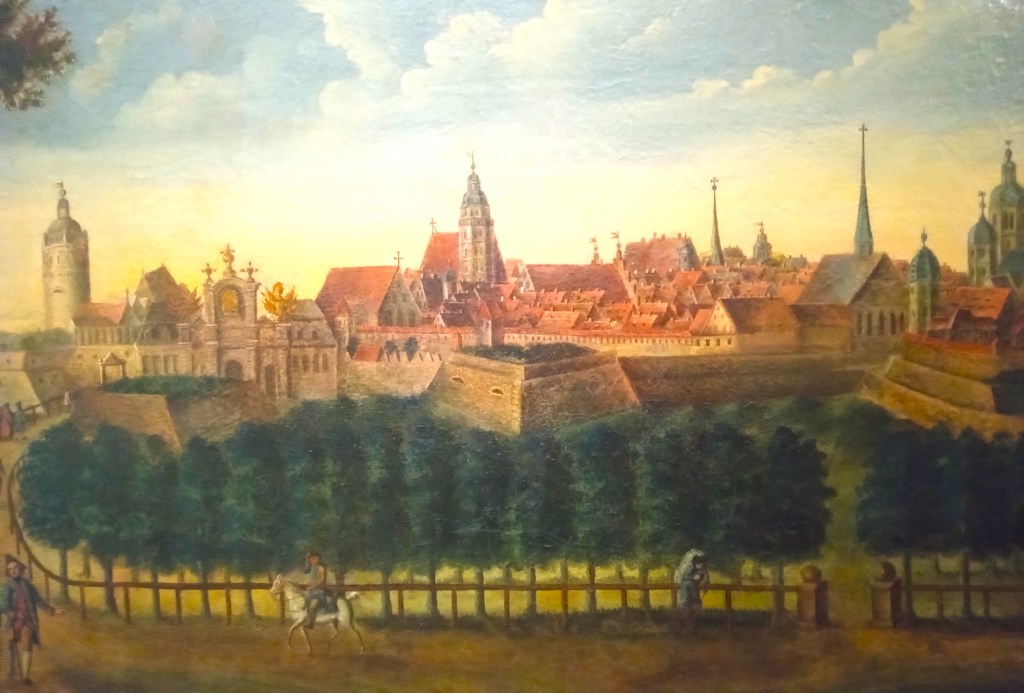
Leipzig
In Leipzig, I found that even after begging pardon and explaining my lack of German – in perfect German, thank you – most people I spoke with seemed to resent that fact and spoke to me in rapid-fire German nonetheless. (If someone asked where I was from and I told them the truth (i.e.not Canada), it was pure disdain…) All in all, this did not prove an issue for me. I would hate Americans as a rule if I lived in another country; after all, the United States is – without question – the greatest proponent of death and misery worldwide since the Nazis. As a matter of fact, I do hate Americans, come to think on it… Also, I think people talk way too much most of the time anyway, so not having any conversations for four days was kind of like a vacation in its own right.
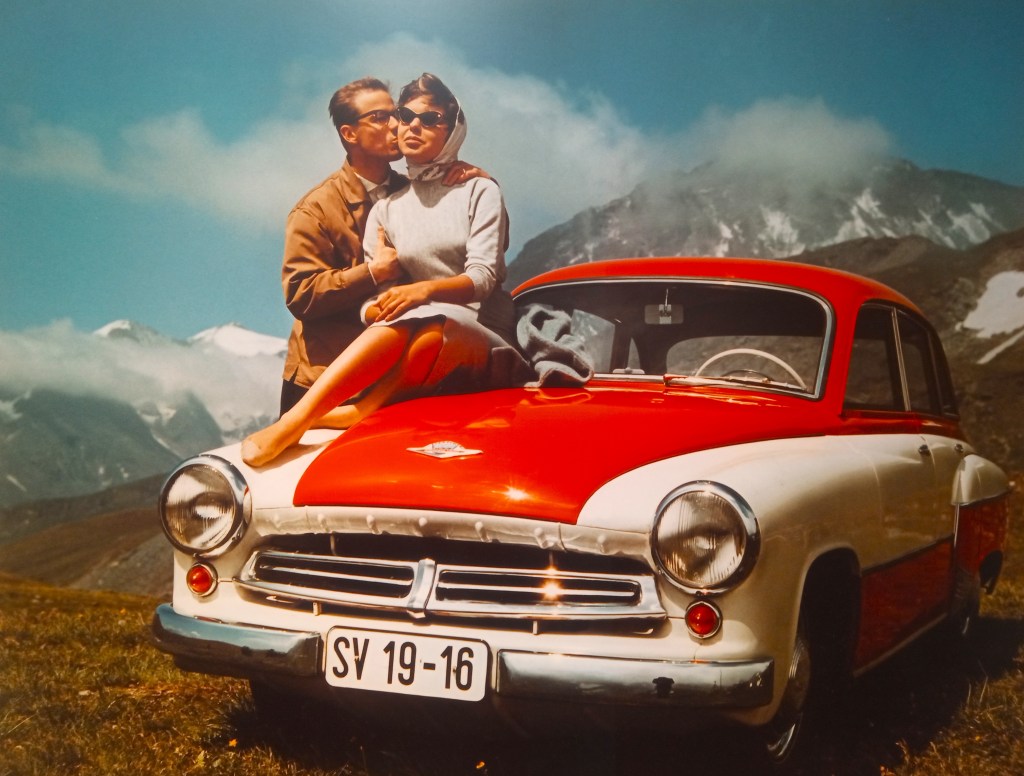
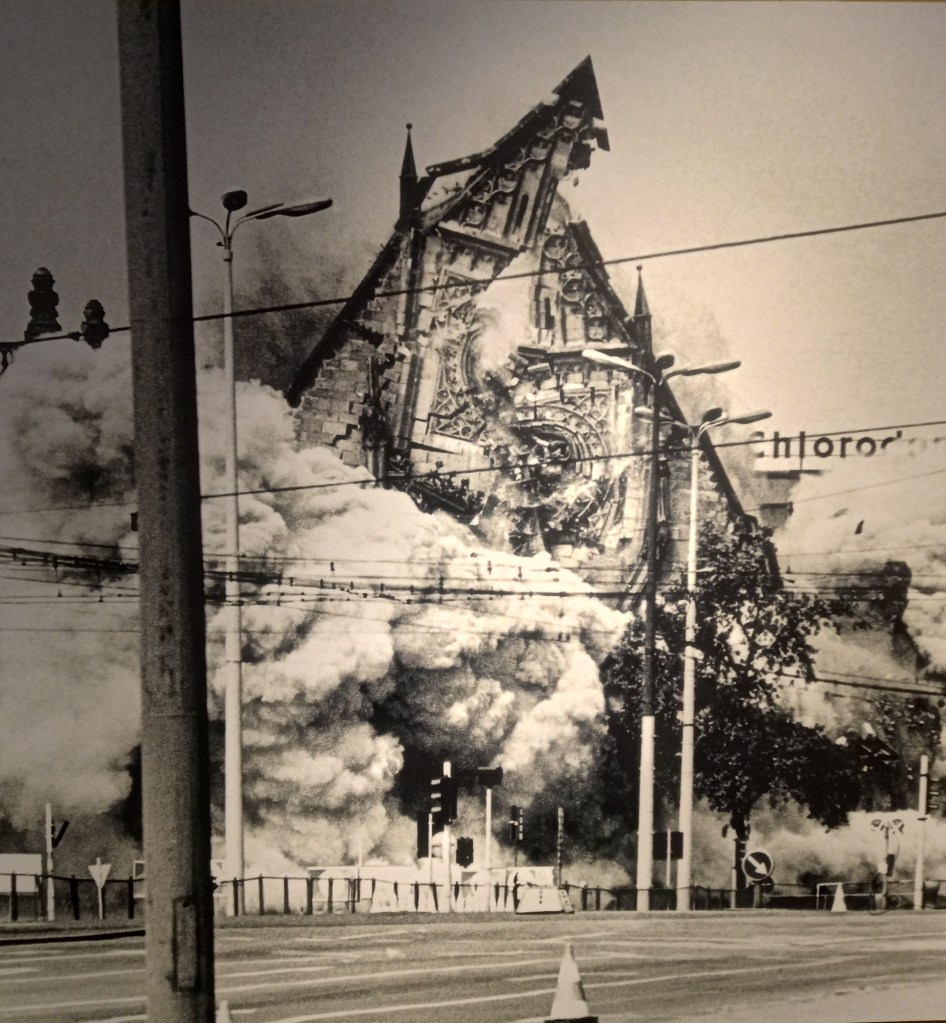
Speaking of GDR, should you ever find yourself in Leipzig with an afternoon to kill, I highly recommend the Stadtgeschichtliches Museum, which was highly recommended to me by my 20-something Airbnb co-host. (Google Translate says “Ministry of Contemporary Culture Museum”, the rare English translation shorter than the German original.) Along with the Baseball Hall of Fame and the Birmingham (AL) Civil Rights Museum, it is the best non-art museum I’ve been to. It is free to attend.
The Stadtgeschichtliches Museum presents a compelling narrative of life in East Germany, from 1945 and the fall of the Third Reich up to the present day. It’s not history I knew well, though I had read an excellent popular history book called 1946 in preparation for this trip and learned all kinds of shit I never got close to in school. But this museum covers 1946 and the 78 subsequent years in addition. It is a people’s history museum, one that leaves you with a sense of what everyday life was like in a very foreign (to me) situation.
Leipzig was the nexus for the peaceful revolution that marked the end of communist rule c. 1990, and the museum is (obviously) critical of the authoritarian GDR state – there is a separate display for the film The Lives of Others and a TV bank of Stasi closed circuit footage, e.g. But it also presents the positive aspects of that state (as with any state, they are few) and it does not minimize the trauma East Germany experienced when it did the hard shift to capitalism in the ‘90s. There was an 8-minute film on loop in a small theater that showed (while I was there, at least) the transformation of one young woman from squatter anarchist punk in 1989 to a cynical and lizardy real estate player in the mid-teens. It was super depressing. Capitalism is a death cult. Why can’t everybody see it?
When I left at closing time, a little over two hours after I got there, I said to myself, “At least they tried.”
I also said, “I have to go back tomorrow,” because I didn’t get through the permanent exhibition.
Just thinking about this museum makes me feel good.
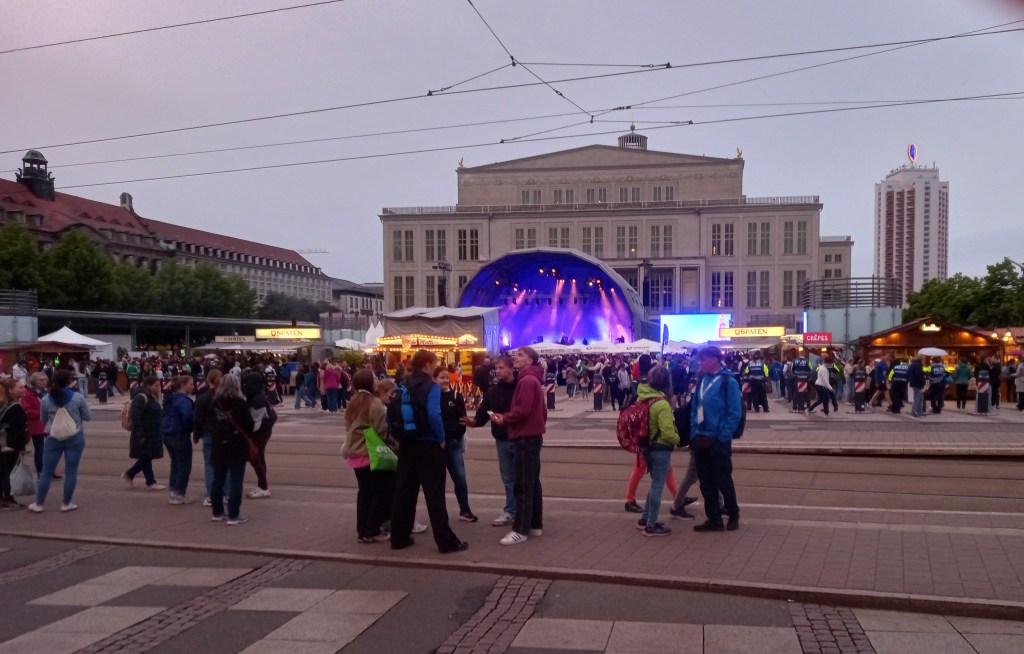
The one unfortunate aspect of this “va-cay” aside from daytime temperatures in the 80s was that the city was mobbed. Walking anywhere in the city center involved constant alertness, with every sidewalk and pedestrian street packed with people cutting this way and that. The occasion was “Das Turnfest,” a gymnastics festival, which lined up, as “luck” would have it, exactly with the four days I was there. Das Turnfest’s website boasts, “With around 80,000 national and international participants, 750,000 visitors and 4,000 volunteers expected, it is the world’s largest competitive and popular sports event.” The city’s population the other 51 weekends is under 630,000, so perhaps I’m understating when I say “mobbed”… Mostly, it was swarms of giddy and chirping adolescent girls, all with hair pulled back and in their team’s shiny uniforms, with a relative handful of coaches and parents on the periphery. I would guess that 80% of those 80,000 participants were teenage girls, but I was nowhere near the stadium (thank god) so I may be off. Really, the thronged sidewalks were less an issue than the Eurodisco pumping out of loudspeakers every other block. Except for some long distance wandering on Saturday, every step I took for the four days was to a deafening Eurodisco soundtrack.
There was also a huge temporary stage, perhaps 30 feet high, plopped right in the courtyard across the street from the Gewendhaus, in front of the Oper Leipzig complex, upon which children jumped rope and tumbled to throbbing Eurodisco and which I could hear from my Airbnb a good quarter mile away.
15 Uhr String Quartet No. 7 in F♯ minor, Op. 108 (1960), String Quartet No. 14 in F♯ major, Op. 142 (1972–1973) String Quartet No. 3 in F major, Op. 73 (1946) Danel Quartet
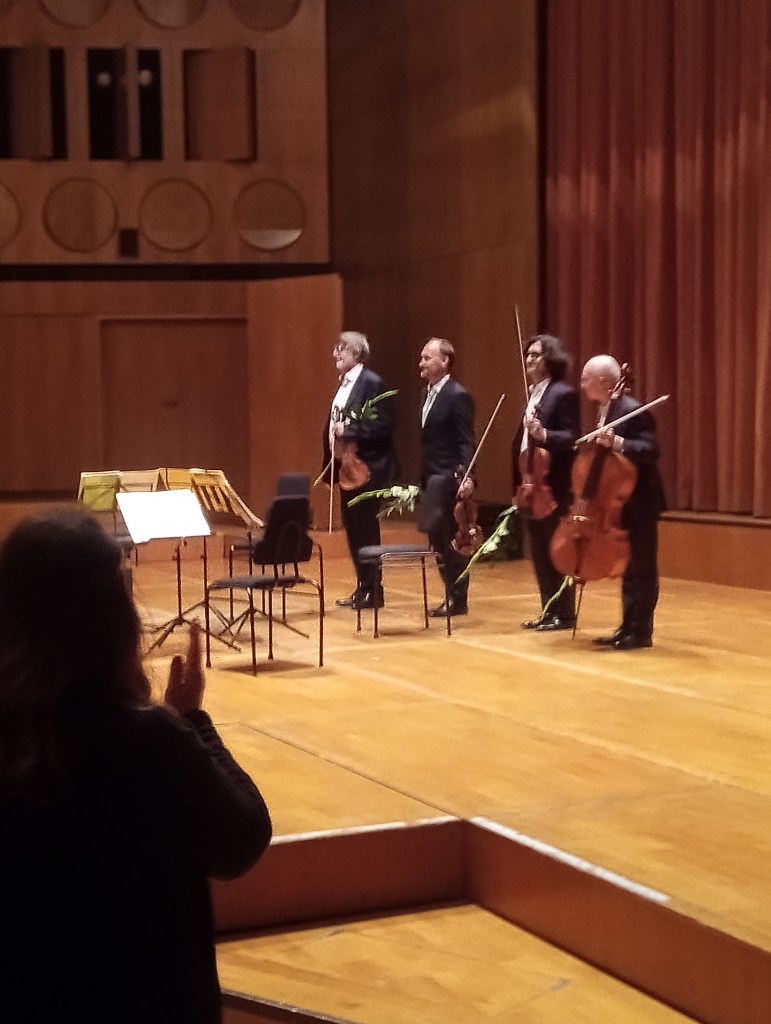
Nelsons and team invited the French/Belgian Danel Quartet (named for its first violinist) to do a run-through of the string quartet cycle. This choice contributed to my ultimate decision to go. The Danel Quartet has recorded the cycle for the Leipzig-based Accentus label.
Despite having read a half dozen books on him, I do not pretend to be anything beyond an awestruck toddler when it comes to Shostakovich. But I think I can talk about the string quartets, thanks in no small part to Elizabeth Wilson’s Music for Silenced Voices, which considers how the quartets reflect Shostakovich’s life in those years (the first was completed in ’38, the 15th a year before he died.) It is an imperfect book, filled with Wilson’s own speculations, often seeming like she’s trying to pad the word count, but her speculations are based on considerable research, she’s a good writer, and the facts are all in there, regardless.
The string quartet, a form he turned while his orchestral music was banned from performance, offered Shostakovich an opportunity to write what he wanted to write (as opposed to the symphonies, which were subject to official scrutiny), in a form – only four performers – that could be shared privately, in living rooms if need be. I have listened to all of them multiple – in some cases, many, many – times, and I have heard performances by most of the highly-regarded ensembles. So when I say that among currently-touring ensembles who have recorded the entire cycle, the Danel’s set ranks alongside the St. Petersburg String Quartet’s set on Hyperion as the top choice, I do so with some assurance.
The Danel Quartet – like any notable quartet (in any genre) you spend time with – are four distinct characters, and they are very entertaining on stage. Marc Danel hikes his left like in the air for extended periods during intense passages, sort of like “Jethro Tull” or “Bonny Prince Billy”, and the other three have their quirks, but my main takeaway – immediately and in retrospect – was that these would be four guys who’d be cool to know. Amiable types.
The 7th string quartet is one that turns up in American concert programming more and more lately because it is as intense and engaging as the 8th but only half as long. I think of it as sort of a sketch or model for the 8th; they were written months apart. Because it is so short – like 12 minutes – I have listened to it many, many times and still I heard things I’d never noticed before in the Danel’s playing. Any thought that a French/Belgian quartet would not be able to match the intensity of the Russian quartets (the Beethoven and Borodin) who worked with Shostakovich in creating the quartets will be dispelled immediately upon hearing the Danel’s opening to the 7th (or check out the second movement in their 8th on the Accentus release – whoa!), but it was really in the anxious, shimmery quieter moments that I heard these new things.
The 14th was next. The last five quartets are a sort of separate entity, employing serial techniques to great effect but sort of (it seems to me) directionless and searching, like searching for something that isn’t there. Like a meaning to life. It’s just not there. Of the five, I love the 12th, and the 11th is super solid, but those last three… My opinion might very well change on these late string quartets some day, but today’s show did not start me in that direction. The 14th was among my least favorite of the 15 going in and going out. I’ll have more to say about the late quartets when I deal with the 15th in the Saturday roundup.
After the intermission, I enjoyed the third string quartet immensely. It is (I think) the first fully-realized quartet of Shostakovich’s cycle, which is to say it sounds like the best music from the war years. And like the second piano trio, it incorporates the Jewish melodies Shostakovich loved as well as the sense of tension that features in the subsequent quartets. The Danel Quartet could not have been better.
Unfortunately, I was aware of time (always a bad thing when listening to classical music) during the third quartet, because the next concert I was going to see on this day started immediately after the Danel Quartet was finished and it was located in another building.
17.30 Uhr Lady Macbeth of the Mtsensk District (1934) Katherine Opelais – Katerina Pavel Černoch – Sergei Dmitry Belosselskiy – Boris Andris Nelsons : Gewendhaus Orchestra & Oper Leipzig Chorus
Actually, Oper Leipzig, which looks like a government administration building, is only about 150m from the Gewendhaus, and there were many people attending both shows, so there had been no cause for anxiety.
Getting a chance to see the Lady Macbeth opera was almost as rare an opportunity as anything else on the docket – it seems to have been performed only 3 or 4 times in the last decade in the U.S. – so it kind of felt like my duty to see it here. I have watched the movie version of Shostakovich’s 1960s edit of the opera, retitled Katerina Ismailova, multiple times on DVD – it’s psychedelic (the Soviets had their own version of Technicolor and it was other-worldly) and Galina Vishnevskaya (for whom Shostakovich reworked the opera) is a true Superstar – and I had listened to the much longer (3 hour-plus) original opera, though only in chunks. But I had never watched the whole opera.
This was my first live opera ever and I can virtually guarantee it will be my last. That’s not to say it wasn’t a brilliant show, in terms of the performances and – especially – in terms of stage design (shout-out to Rifail Ajdarpasic). I just don’t like opera. I don’t really understand how anyone could. What a ridiculous art form. Maybe some day I will come around on this, but time’s running out…
I think I did make a mistake in reading the subtitles (in German and English) above the stage. I noticed this when I watched the Live at the Met version of Kaija Saariaho’s L’amour de Loin some years back – the words are really inane, and they repeat over and over and over. Sort of like Catholic masses in Latin – they sound better than they read. I know the story back and forth – the brilliant film version of Nikolai Leskov‘s novella (originally published in Dostoyevsky’s literary mag, to give you a sense of the vibe) with Florence Pugh tells the whole very grim story, including a scene from the novel Shostakovich left out where the heroine and her lover murder a child – so there was really no need for me to read the damn subtitles but I couldn’t help myself. When I see text I read it. But if I ever go to another opera – unlikely – I will make a point to know the story well ahead of time and NOT read the subtitles. Maybe I will wear a cap and pull down the brim so I can’t see the text.
Andris Nelsons chose his spouse (or perhaps he had little choice in the matter), the Latvian soprano Kristine Opelais, to sing the role of Katerina Ismailova. She, I learned from the program (or rather think I did since it was all in German), is considered a Verdi specialist, and as such maybe an unusual choice for the very earthy title role that most Shostakovich fans associate with the very earthy Vishnevskaya. Opelais was fine, though, and Belosselskiy as her horny and intimidating father-in-law and Černoch as the sleazy stud for whom Katerina commits her murders brought tremendous acting skills to the narrative.
I will say the sex scene in Act I that caused Stalin discomfort in 1936 caused me discomfort in 2025. In the movie, which I have watched three or four times, I don’t even remember the sex scene, but in the opera it goes on a longggg time, and the way they played it here, Sergei and Katerina could have actually been copulating. I am a little squeamish about that kind of thing, I suppose. (I shunned the Jack Nicholson-Jessica Lange remake of The Postman Always Rings Twice, for point of reference.) But I do kind of get where “Papa Joe” was coming from… (It was not Stalin’s prurience that resulted in the Lady Macbeth denunciation, it should be noted, so much as the (fairly subtle) criticism of collectivization in the narrative of trouble on a farm and the inverted moralism in the portrayal of Katerina, a murderess, as a hero. And it wasn’t entirely Stalin’s doing, anyway.)
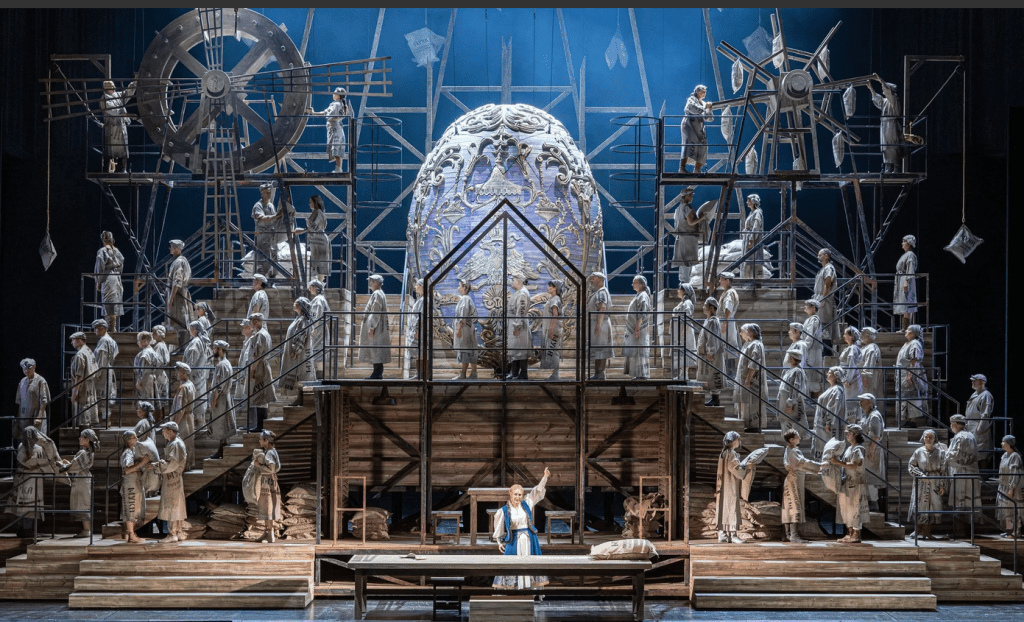
The production, which featured a gigantic Faberge egg in the center of the set and elaborate set pieces evoking a sort of Metropolis/Animal Farm mash-up, was visually stunning – surreal – from start to finish, and so I did not struggle getting through the nearly 3-hour production as much as I might have, but I was not sorry when it was over.
The haunting melody of Katerina’s Act I aria (while she is singing about animals fucking, a solid from Shostakovich) might have lingered in my head on my walk home, but no go: stepping out of the opera house and into the butt end of the enormous temporary Turnfest stage, I was assaulted by a thumping Eurodisco version of “Everybody Wants to Change the World,” whose cloying chorus has lingered in my head ever since. Six weeks…
____________________ Friday, May 30
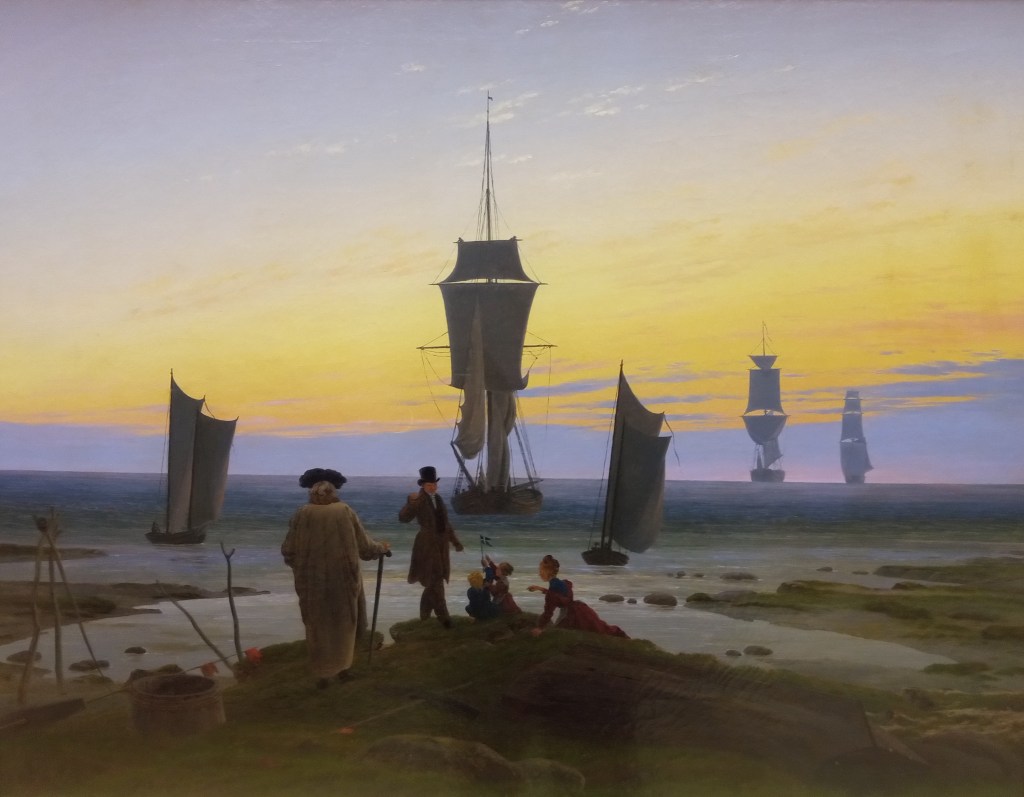
In the morning, I went to the Leipzig Art Museum. Its permanent collection is also free to see and definitely worth a visit if you like 19th century painting. They have three Casper David (the Man) Friedrich paintings, including The Three Stages of Life – one of I think two paintings he did with a human face in it – that justified the climb (VERY high ceilings…) in themselves. I did not pay the 10 euros to see the third floor, which has the modern stuff.) And then I went back to the Stadtgeschichtliches Museum.
15 Uhr String Quartet No. 4 in D major, Op. 83 (1949) Two Pieces for String Quartet String Quartet No. 12 in D♭ major (1968) Danel Quartet
This program might have got me to Leipzig by itself, now that I think about it. The fourth quartet (1949) is, to my mind, the greatest of the pre-1960 quartets, in a league with Shostakovich’s Piano Trio No. 2 (1944) as his greatest accessible-to-anyone chamber music, and the 12th is also in my Top 5, by far the most successful (to my mind) of the later, darkest quartets. The first of the two pieces for string quartet is an arrangement of Katerina’s stunningly beautiful aria from Lady Macbeth. An amazing program, brilliantly rendered.
Leipzig has an important place in Shostakovich lore, since it was there, when he was judging the first International Bach Competition for pianists in 1950, that he was inspired to write his one and only magnum opus for the solo piano, his 24 Preludes and Fugues, Op. 87. Shostakovich was, of course, a virtuoso pianist himself – you can watch dazzling B/W performances of him playing on Youtube – so it seems odd he wrote so little for solo piano in his mature (post-Lady Macbeth controversy) years – just the No. 2 Sonata and Op. 87. For most virtuoso pianist-composers (e.g. Beethoven, Liszt, Chopin), solo piano works represent the great majority of their outputs, opus number-wise.
I listened multiple times to Alexander Melnikov’s versions of the 48 pieces – a set the (really not worth subscribing to) BBC Music MUSIC magazine called one of the 50 greatest albums of all time – in the weeks before my trip and found I liked perhaps a quarter of them, and so it was only last minute that I decided to attend this particular concert. But performances of Op. 87 in its entirety are (also…) exceedingly rare, I was in Leipzig and I had nothing else to do, so I figured, why not?
Yuliana Avdeeva is a highly-esteemed Moscow-born pianist who recently recorded the full set – in the Gewendhaus’s Mendelssohn Hall, yet – for the Dutch Pentatone label. Because I wanted to be able to see her hands as she played (I never understand why anyone would pay to sit on the right at a piano recital, when all you can see is a head bobbing around…), I was sitting at the rear rim of the sold seats in the big hall. Avdeeva is a 39-year-old woman, but she is lithe of frame, has very large eyes and a small chin (she’s quite attractive, in case you’re picturing E.T.) and she sits very erect and still at the keyboard, so – and undoubtedly this was colored by both fatigue and the unavoidable 2-day immersion in Das Turnfest – from where I sat, I frequently saw an adolescent battling nerves in her first major competition. I’m not sure that’s worth mentioning but somehow it added an element of drama to the performance for me.
In reality, Avdeeva had to have approached this performance with some measure of trepidation, if only for the facts that many of the pieces are absurdly difficult, and that the entire program takes about two and a half hours to play.
The performance defined Op. 87 for me – there is much, much more in there than I’d thought – and on Yuliana Adveeda, whom I wasn’t too aware of before this. It was an astounding show of athleticism and grace on her part, and I kick myself for not having bought tickets sooner. If she does a U.S. tour with this, I’ll travel to see it again. As long as it’s not at the Kennedy Center. Or in Texas or Florida. ____________________ Saturday, May 31
11 Uhr String Quartet No. 1 in C major, Op. 49 (1938) String Quartet No. 10 in A♭ major (1964) String Quartet No. 15. Op. 144 (1974) Danel Quartet
11 uhr is 5 a.m. by my biological clock, jet lag was seeping in, and I was sitting behind a soft pig of a man with an enormous head that was constantly lolling and eclipsing one side of the stage or the other. The Mendelssohn Hall is not, as I’d assumed wen buying tickets on-line, a theater but a performance space with a flat floor. The encumbered view from 6 or 8 rows back had not really been an issue the previous two days, but this guy’s fat bald head lolling around like a turd in a toilet bowl was annoying as hell and diminished my experience with the program.
Or maybe I didn’t drink enough coffee that morning. I didn’t want to drink so much that I would have to pee during the performance. I have had some plumbing issues.
On my radio show in 2025, I am playing the Shostakovich string quartet cycle in honor of the anniversary of his passing and in celebration (if that’s the right word) of ten years on the air. However, I skipped number one and started with number two. There is nothing wrong with number one, it just seems kind of like a sketch relative to those that followed, a toe-testing of the waters as far as the format goes. It was nice to see it live, where I picked up on Shostakovich-y elements I didn’t pick up on disc, but it is still (to me) a slight work.
String Quartet No. 10, on the other hand, would be the string quartet I’d recommend to people new to Shostakovich. I would call it his greatest without hesitation and it definitely should be in the regular string quartet repertoire but isn’t. It has two incredibly beautiful themes, announced immediately in the first and third movements, which re-emerge in the final movement after a searching, anxiety-ridden introduction. The third movement might be the most beautiful music Shostakovich wrote (which is saying something), and the second the most jagged and punk rock (which is saying something). Again, brilliantly rendered, but that fat head… bob bob bobbing around…
After the intermission and finding a new seat came the 15th. I will be honest and admit I’d only listened to it once or twice beforehand. As I play the string quartets in order on my radio program, I am listening to the ones next in the queue extensively, but I won’t get around to the 14th and 15th til September – providing, that is, there is a September. And so I did not know this one well going in, only that it seemed a lot longer than it actually is.
The 15th string quartet from 1974 and the ghostly viola sonata he was working on when he died in ‘75 (another work that I have trouble getting into) really seem to me to be Shostakovich’s parting shots. People talk about his 15th symphony being the place where he made his profound statement about his imminent departure, but I would argue (as I always do) that aside from the 13th and 14th, all of his symphonies, including the 15th, were written for general audiences. The 15th string quartet, on the other hand, would be NC-17 if ratings were based on angst.
There are those who purport to rank Shostakovich’s 15th with Beethoven’s 15th in terms of great existential works of art (indeed, the Danel Quartet pairs the two in concerts), but I am afraid I am not one of those, and I suspect that Shostakovich would have been dismayed by that notion himself (an easy guess, as intense self-deprecation was his default setting…) Beethoven’s 15th, one of human history’s towering artistic achievements, is staggering in its complexity and thrust, while, to me, Shostakovich’s is a desultory wallow in self-pity. I don’t say that as a criticism – Shostakovich was quite outspoken about his dread of death and the incomprehensible emptiness that lies beyond, and his 15th string quartet, made up entirely of SIX meandering adagio movements, feels like the stumbling mental confusion of someone about ready to turn out the lights.
Again, it is entirely possible, probable even, that I am missing in there something that I am perhaps not yet ready to deal with, but on this day, like the opera, it was a slog and I was happy when it finally ended. I left feeling dreary and drained – emotionally, mentally and physically.
(P.S. It took six months and a bunch of listens, but I have totally come around on the 15th string quartet. It is, I think, a truly great work and one I’d like to see again (which will never happen unless I move to Germany) – even if “desultory wallow in self pity” is, I think, fair.)
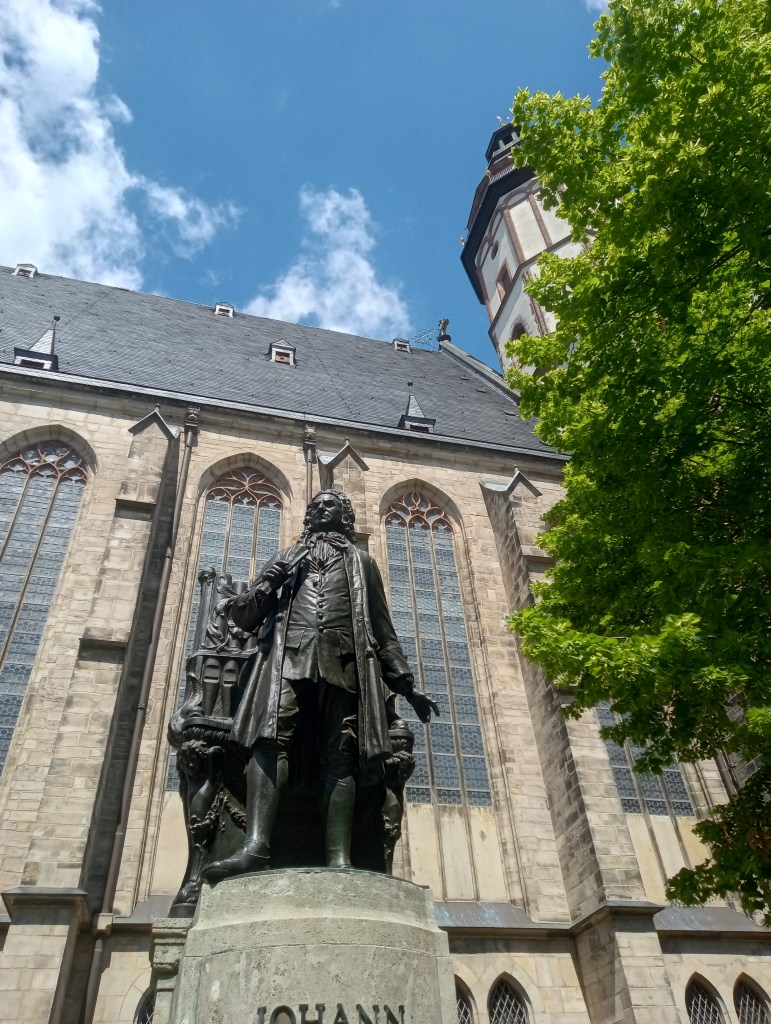
Because I had no interest in seeing the evening’s orchestral performance (the first piano concerto and the two worst symphonies), I had the rest of the day to kill. I walked around, looked for a record store I didn’t really care if I found, toured the Leipzig History Museum’s two floors (also amazing and free), had some remarkably tasteless Middle Eastern food (cabbage on falafel?) , and then went to hear a concert at Tomas Kirche, or St. Thomas church, where J.S. Bach spent the last 27 years of his life (1623-1650) as Cantor and Music Director, cranking out some of his most memorable music (e.g. the B minor Mass & St. Matthew Passion). They have concerts at the church every Friday and Saturday afternoons for a 3 euro donation. This seemed worth doing, and was; however, if you do do it, do not expect to see the performers. They are up on a second deck behind the pews. The boys choir was off for summer break, so I saw a choir and organ recital that had music by some contemporaries and some 20th C. stuff.
There is a Bach Museum across the street, but I wasn’t feeling it… It was a beautiful sun-shiny day and not too hot, the kind of weather you need to enjoy. Still with a lot of daylight left, I wandered down into the “hip” part of Leipzig (if hip is defined as graffiti-covered) and decided against walking in the park, as I was getting a Tar jogging scene vibe…
____________________ Sunday, June 1
11 Uhr Symphony No. 14, Op. 135 (1969) Symphony No. 10 in E minor, Op. 93 (1953) Kristine Opelais – soprano Dmitry Belosselskiy – bass Andris Nelsons: Gewendhaus Orchestra
My train to Berlin was that afternoon.
It was appropriate, I think, that Nelsons scheduled the 14th and 10th symphonies for the closing performance of the festival. The 10th because it is regarded by knowledgeable classical music fans as Shostakovich’s symphonic masterpiece – a massive, bombastic and profoundly serious symphony that delivers what fans of Mahler and Bruckener and Sibelius and Beethoven’s symphonies want from a symphony. And the 14th, because it is the work Shostakovich considered to have been his greatest. And also because it is about Death.
The 14th was the first half of this Sunday morning bill. Again, Kristine Opelais would not be my first choice for the soprano part in the 14th symphony (I’d have liked to hear a huskier voice – like Ruby Hughes’s – maybe), but she sang excellently and had good stage presence in her (appropriately) black gown and solemn countenance, and the bass, once he shook off some wavering in the first song (which I chalked up to the a.m. start time), he delivered some ominous rumbling. It is the instrumental parts that draw me to this symphony – percussive, sparse and terse like the 13th symphony – and the performance was excellent, though not in the league of my favorites. (For a non-Russian take on 14, it is hard to touch Bernard Haitink’s with the Royal Concertgebouw with Dietrich Fischer-Dieskau and Julia Varady.)
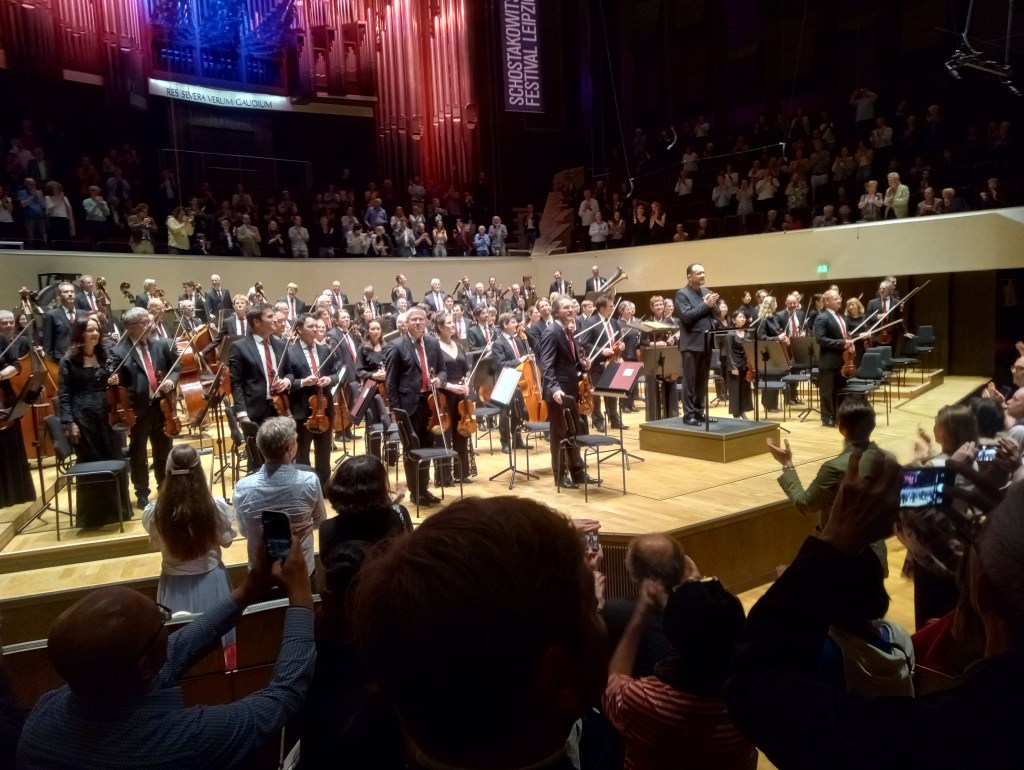
Symphony No. 10 followed another interminable intermission. (By this point, the seventh concert, “people-watching” had lost any allure.) I don’t like the 10th symphony at all, so I can’t really comment on this. It went on a long time. People gave it a huge ovation, three curtain calls, etc., etc., so there’s that. But then all seven of the concerts had had huge ovations, three curtain calls…
(P.S. I have since given the 10th multiple listens and I still can’t get with it…)
There was, undoubtedly, within the ovation for that final concert of the festival, an expression of gratitude and appreciation for Nelsons and what he and his team had pulled off. That was why I was applauding, at any rate. A tremendous accomplishment and one that truly honored its subject.
After the third curtain call, Nelsons addressed the crowd in German. It went on for a while and I wished I knew what he was saying. Luckily, he went ahead and addressed the crowd in English after he finished in German – there were a lot of foreigners in this crowd and I know that because they were Asians who did not speak German. (One of the true benefits of the largely malignant U.S. empire of the 20th C. – for its citizens, at least – is that English became the lingua franca for the end times…) Nelsons said that part of what makes Shostakovich’s music so powerful is that it was written during and in response to a totalitarian government that was, for much of Shostakovich’s life, murderous and punishing. Nelsons said he never thought we would allow ourselves to sink into such a poisonous situation again… and yet, here we are.
Here we are.
The trip back sucked.
____________________ So, what did I learn in my 4-day Shostakovich boot camp?
Mainly, I learned that 7 concerts in four days (8, if you count the St. Thomas concert) is too much… Really, given that I was asleep 36 of those 92 hours, it was 7 concerts in 56 hours. Any one of these seven shows would have been the highlight of any given typical year for me, but all together it was overkill. I suppose I should’ve gone in knowing that, given my experiences at music festivals in other genres over the years. I think I might have better appreciated several of those problematic (for me) works like the 10th symphony and last two string quartets had I seen them performed in one-off concerts.
But now, having had six weeks to reflect, I can say it was indeed a once-in-a-lifetime experience. I saw so many things I’d never have seen otherwise, and those pieces I loved going in, I loved even more going out. It was “bucket-list shit” in the most profound sense. (That was it for my bucket-list, though… not sure what that implies…)
I can not adequately express my gratitude to Nelsons and team, to the Gewendhaus, and to Leipzig itself for putting on this festival.
And Yuliana Avdeeva and the Babi Yar symphony were truly, for me, revelations of the sort life rarely doles out anymore.
Also, I learned that it is pretty easy to get around Germany without talking to anybody.
And I learned that the Aldi’s in Germany suck compared to the ones in the U.S. The one in central Leipzig, at least, was kind of like a Dollar General (though with a solid produce section). This threw me for a loop.
Mostly, the trip reinforced ideas, convictions or suspicions I already held:
Being a classical music fan in the United States, outside of maybe NYC, is like being a bluegrass fan in Germany. In fact, with two world-class orchestras (the Gewendhaus and the MDR, where Dennis Russell Davies is music director) and multiple concerts virtually every night of the year, Leipzig makes NYC, a city thirteen times its size, look like Des Moines. This festival really drove that home. It’s just a whole different world over there. It makes total sense that most of today’s great composers move to Germany, if they weren’t born there.
In Europe, Shostakovich has already attained “great” status, alongside people like Beethoven and Mahler and Brahms. This is as it should be, of course, but – and I suppose this only reinforces the point I made in #1 – it will never happen in the United States because Americans are too fucking stupid. Before I went on this trip, I Iooked at the Boosey and Hawkes website – Boosey and Hawkes is Shostakovich’s publisher and keeps tallies of concerts of his music on its site – and I found that in 2025, this 50th anniversary of his end date, there were or will be some 360 performances of Shostakovich’s music in Germany alone. In the United State, there were or will be fewer than ten.
There were some other things, but I’ve forgotten them. At any rate, enough said.


 Concentration Camp