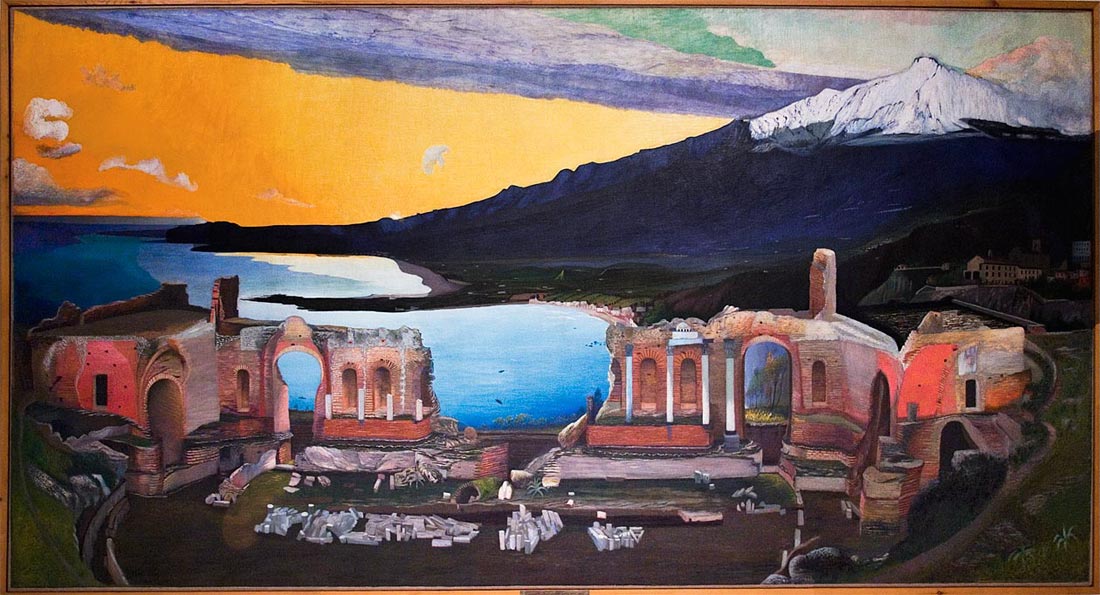
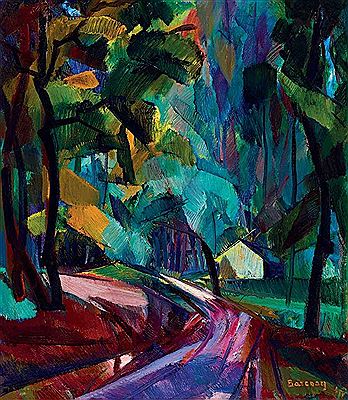
CC Mixtape #27: Autumnal Mix


0:00:00
Virgil Thomson (1896-1989) ~
    Autumn (Concertino for Harp, Strings & Percussion)
       Neville Marriner: Los Angeles Chamber Orchestra
          Virgil Thomson: Music for Films (Angel/EMI)

0:03:47
Jean Sibelius
    5 Songs, Op. 38; No. 1. Hostkvall (Autumn Evening
       Soile Isokoski w/ Leif Segerstam: Helsinki PO
          Sibelius Luonnotar Orchestral Songs (Ondine)

0:08:42
Andrzej Panufnik (1914-1991) ~
    Autumn Music
      Lukasz Dlugosz (flute) w/ Lukasz Borowicz: Polish Radio SO
          Andrzej Panufnik Symphonic Works, v. 3 (CPO)

0:28:49
Vítězslava Kaprálová (1915–1940) ~
    2 Bouquets of Flowers; No. 2. Podzimní listí (Autumn Leaves)
      Giorgio Koukl
        Kapralova: Complete Piano Music (Grand Piano)

0:29:45
Lepo Sumera (1950-2000) ~
    Seenekantaat (Mushroom Cantata); III. Autumn Song
      Tono Kaljuste: Estonian Philharmonic Chamber Choir & Tallinn CO
        Sumera: Mushroom Cantata & Other Choral Works (BIS)

0:35:38
James MacMillan (1959- ) ~
    String Quartet No. 1, “Visions of a November Spring”;
    II. quaver = ca. 90
      Emperor String Quartet
         MacMillan: String Quartets 1 & 2 (BIS)

0:50:50
Sadie Harrison (1965- ) ~
    an angel reads my open book; II. a dream; autumn in palanga
      Rusne Mataityte w/ Donatus Katkus: St. Christopher CO, Vilnius
        Harrison: An Unexpected Light (NMC)

0:51:49
Imogen Holst (1907-1984) ~
    Fall of the Leaf
      Simon (v) and Thomas (c) Hewitt Jones, David Worswick (v) & Tom Hankey (va)
        Imogen Holst: Chamber Music (NMC)

0:59:36
Georgy Sviridov (1915-98) ~
    Otchalivshaya Rus’ (Russia Adrift); No. 10 (arr. L. Rezetdinov for voice and orchestra);
      Yuri Serov: St. Petersburg SO
        Georgy Sviridov: Russia Adrift (Naxos 2017)

1:01:54
Leonid Desyatnikov (1955- ) ~
    Russian Seasons: Autumn (Fasting Song/Autumnal Song/Wedding Song)
      Roman Mints, Yana Ivanilova
        Desyatnikov: Sketches to Sunset & Russian Seasons (Quartz)

1:11:56
Antonin Dvorak (1841-1904) ~
    Schmerz (Autumn Lament) (arr. Julian Lloyd Webber)
      Julian & Jiaxin Lloyd Webber (cellos) w/ John Lenehan (p)
        A Tale of Two Cellos (Naxos)

1:15:41
Ottorino Respighi (1878-1936) ~
    Poema Autumnale
      Lydia Mordkovitch w/ Sir Edward Downes: BBC PO
        Respighi: Concerto Gregoriano, etc. (Chandos)

CC Mixtape: Best of Kronos Quartet*

Kronos Quartet
Sept. 17, 2019
Wortham Center for the Performing Arts
Asheville, NC

[* For the Mixcloud program, I compiled many of my favorite Kronos renditions. It does not resemble the playlist for the performance at the Wortham Center reviewed below… The playlist for the mixtape follows the review.]

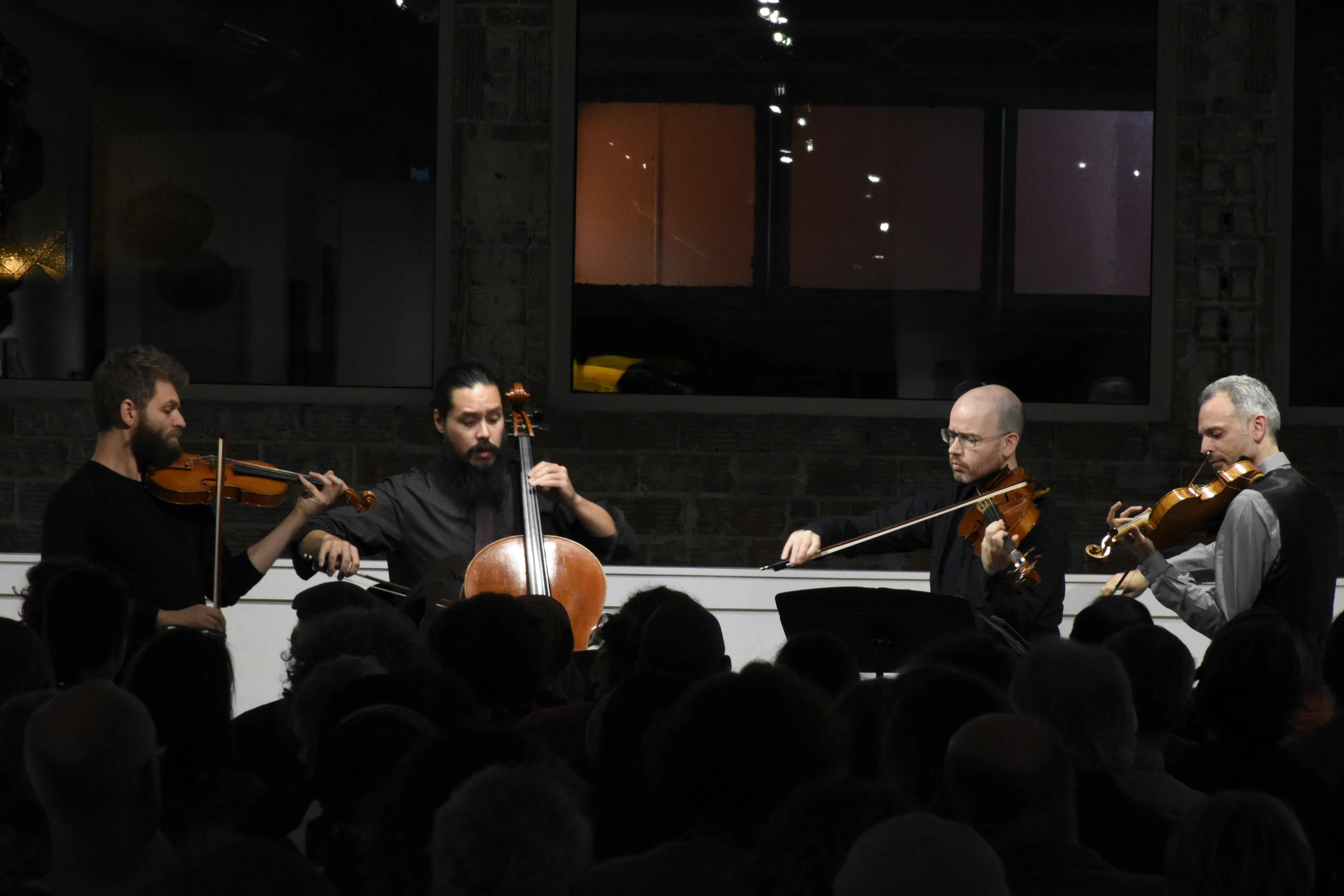
I had the chance to thank David Harrington, the Kronos Quartet’s first violinist and figurehead (the one with glasses), after the KQ’s performance at the Diana Wortham Theater, and while it was as awkward as most of my Asperger-tinged interactions with strangers whom I hold in highest esteem, it was something I needed to do and so, dutifully, did.

I mention, in my written reviews and on my Sunday evening radio show on WSFM, that I only started listening to classical music deeply about four years ago (and exclusively about a year after that), when I was granted a time slot on WSFM’s schedule. I bring this up again here for two reasons. One is to point out to the classical-curious – you, perhaps – that modern classical music can be enjoyed – loved – without a formal musical education (technical or historical) – and the Kronos Quartet is a helpful guide to the Modern era. The other, more specific, reason is that the Kronos Quartet’s 2-CD presentation of Alfred Schnittke’s four string quartets on Nonesuch, which I found in a cardboard box of CDs donated to the station back in ’15, was a genuine turning point in my life. I’d known the Kronos name for years, but I was utterly unaware of Schnittke. It was the Kronos name, then, that made Schnittke first on the playlist when I got home (I’d culled 40 or so CDs from the box); in turn, it was that set, within the first listen, that triggered what grew into an obsessive love for modern-era classical music. If Schnittke was the gateway drug, the Kronos Quartet were the pushers. If I may extend the metaphor, the shit was pure. That is why I had to thank David Harrington.

I regard the KQ as gods of sorts for multiple reasons. Foremost,before they are cultural icons they are great musicians. Like Yo Yo Ma and Gidon Kremer, you have to be especially talented in order to take on the role of proselytizer. In the classical music world, the stars are the super talented, by and large (which is definitely NOT the case in the other arts.) Also, Kronos Quartet participated, as peers, in the last semi-exciting classical movement (minimalism), performing works written for them by Philip Glass, John Adams, Steve Reich and Terry Riley.

Then there are the facts that by dint of their stature that they’ve prominently showcased neglected/little-known genius composers of the modern era (besides Schnittke, they introduced me to Aulis Sallinen, Peter Scullthorpe, and George Crumb’s “Black Angels”); that they’ve given huge boosts to budding composers in the Western tradition (Michael Gordon, Alexandra Du Bois, too many to name); and that they’ve explored contemporary East and Southwest Asian composers writing for Western instruments (Reza Vali, Franghiz Ali-Zadeh, Tan Dun). They’ve had, I read in one place, over 900 works written for them.

And then they’ve inspired, if not laid the template for, a second generation of open-minded outfits like the Bang on a Can All Stars, Eighth Blackbird, the Knights, Roomful of Teeth, and Brooklyn Rider, all of whom have attained celebrity of their own by now. A third generation is in the works. You could make an argument that they have been more crucial to classical music’s survival in a densely noisy post-modern world than any other single act.

But it is in their roles as ambassadors to the Wider World of Music(s) that they’ve made their name one all music fans know. Since forming in Seattle in ’73, the Kronos Quartet has arranged music by and worked alongside musicians from the gamut of other Western genres – jazz (they’ve recorded albums of Thelonious Monk’s and Bill Evans’s music, e.g.), hip-hop (see below), rock (they’ve played with Sigur Ros, Paul McCartney, Bowie and Patti Smith, among many), bluegrass, folk, tango, samba… Just as significantly, they’ve collaborated – copiously – with indigenous musicians from every continent except Antarctica (come back in 20 years…); I’d guess about half of their releases – there are 40-something going in to this show – could be considered “world music”. They have had number one hits on Billboard‘s World Music chart and have won Grammy awards in the category. Whatever you might say about this project or that (and there are a number I have no real interest in hearing), the collaborations (or at least those I’ve heard) have all been full-on 50-50 collaborations – models of what collaboration should aim for. And that is the Kronos Quartet that fills theaters.

The Diana Wortham set highlighted that quartet’s tireless advocacy and social consciousness, and not (as I might have hoped) its forays into the dark crannies of the Modern-era avant-garde. Accordingly, the program was an ADHD-friendly smorgasbord, entailing a rock set-like 13 pieces (plus two encores), none much longer than 8 or 10 minutes, with an intermission between numbers 6 and 7. It highlighted the quartet’s current wide-reaching project, called “50 for the Future,” in which they have commissioned works from 25 female and 25 male composers (five apiece each year for five years). It was the sort of bill that, on paper (or laptop screen), may seem gimmicky and almost desperately multi-cultural and gender-conscious but that, in concert works very well, I must admit.

The first piece on the bill was a case in point. It was from the “50 for the Future” project, written by a younger black woman from Gary, Indiana, named Jlin (short for Jerrilynn Patton). I’d never heard of her, but she is (I learned afterwards) famous. (I am out of it, by design.) She creates skeletal, skittering electronic dance-scapes that I have been enjoying quite a bit on Youtube the last few days. (You can hear her electronic demo for the song the KQ played, “Little Black Book”, on their website; clicking on the “50 for the Future” tab will take you to their Soundcloud page; then, scroll down.) Jlin was a math major at Purdue until she dropped out; she worked in a steel mill afterwards, which she said had no effect whatsoever on the music she’s composed since. It doesn’t get any better than that. How did the gravelly blats and twitters of Jlin’s electronica sound when rendered by a string quartet? It sounded like dark-hued chamber pop, gothy and exuberant at once. It got the evening off to a brilliant start.

Next was an arrangement of “House of the Rising Sun,” inspired, Harrington said, by the Everly Brothers’ version (as opposed to the Animals’?). It sounded like “House of the Rising Sun” played by a string quartet, to the delight of those who are fond of that song…

Getting to hear a bonafide world premiere performance by the Kronos Quartet was a nice perquisite. Harrington explained that the score for the next piece – another “50 for the Future” comission – by 38-year-old Virginian Alexandra du Bois (doo-Bwaa), had arrived that very day. She’d contributed a piece to the quartet’s “Under 30” anniversary project back in the W years, which can be heard on Youtube and which I like, a lot. The KQ may be genial ambassadors, but that doesn’t mean they won’t challenge an audience, and it was something like a statement to slot this particular piece so early on the evening’s bill. It is a hushed and inward-looking piece. Sheets of gauzy, minor-key chromata brush against one another like curtains behind a broken window in an abandoned house. It is powerful enough in its understated way to mesmerize an audience. Coughs and fidgets were audible throughout the first few minutes; you could feel people wondering, “Is this going anywhere?” By halfway through, however, the crowd was as silent as believers at a seance. Or maybe they had fallen asleep. It was a masterpiece in my book, like the couple of other pieces of hers I’ve heard.

Thelonious Monk’s “‘Round Midnight” sounded good in the live version. Thelonious Monk’s piano playing is instantly recognizable even to non-jazz fans, but the oblique, microtonal runs on the piano sound utterly different when played by strings. It sounded like a deconstruction; deconstruction is good.

Then came two by disco-era art stars, Philip Glass and Laurie Anderson. The Glass piece up first reminded me – I need reminding sometimes – that his music is still immediately identifiable even as he has grown far beyond the constraints of the “Einstein on the Beach” or “Koyaaniqatsi” sort of rollicking calliope minimalism I will always associate him with. Laurie Anderson’s contribution to the “50 for the Future” was a very pretty piece called “Flow”, and I’d have never guessed it was by her. It’s in three parts and it is also on the Soundcloud page. It reminded me I like her music more when she is not talking above it.

The last piece before the intermission was five-parter by a woman named Stacy Garrop , entitled “Glorious Mahalia.” It sets to music excerpts from an interview with late two cultural icons of yore, the gospel singer Mahalia Jackson (1911-1972) and the raconteur/author/radio host sans pareil, Studs Terkel (1912-2008). While there were some snippets of Jackson singing (she was an ethereal talent, the sort who fills all space around her when she’s singing a capella), but most of it was talk. Pieces that use spoken words are difficult from the outset because in order to succeed they must strike a very fine balance – not just in terms of volume between the voices and the music but also in terms of what the audience is to focus on. The Kronos Quartet has no peer in performing works of this ilk, having backed Allen Ginsburg reciting “Howl” among many such projects. This particular piece achieved that precision balance as well as anything in the Kronos discography, perhaps because the intermittent clips of Jackson’s singing grounded the piece as a musical composition, instead of a documentary with soundtrack.

(If I may digress a moment, hearing Studs Terkel’s mellifluous rasp again for the first time in years – I was a regular listener to his radio show – got me thinking how desperately we could use a voice, and conscience, like his today. Aside from Naomi Klein, where are – who are – our vital public intellectuals today? It is entirely fitting that the Kronos Quartet would play a piece incorporating a Terkel interview, because at heart their missions – promoting brotherhood and humanism – were/are very much the same, as was/is their approach: chill, gracious, and welcoming.)

Before sharing my not particularly insightful observations of the second-half works, I should acknowledge the Kronos Quartet’s sound and lighting directors, Scott Fraser and Brian Scott respectively. The sound was, in a word, perfect. The lighting was at once austere and absolutely stunning. The 30′ high curtains behind the stage were lit with what appeared to be two spotlights describing a steep X. Gradually shifting colors accompanied the music; the upper lobes of the spots hazily described a heart – maroon on dirty gold-green background or fire engine red on royal blue – and during one song the lobes morphed into a pale white skull with black sockets against a purple backdrop. In the show’s second half, Scott projected Islamic-y calligraphic patterns on the stretched heart shape.

The second half of the show commenced without an introduction from Harrington with a piece by Bryce Dessner. I wasn’t taking notes at that point, because I kept dropping my pen and the notes I’d taken in the dark during the first set were all on top of each other and so illegible, but I remember that I loved it and that I was glad I’d been unaware it was Dessner, since he is in a rock band (The National) and has worked with Bonnie Prince Billy, and I am wary of such things. Which, I realize, is a foolish parameter, since if (say) Aaron Copland had been born in 1950 instead of 1900 he’d have been in a rock band; had he been born in ’90 he’d have been a DJ or electronica person. I know, I know.

Speaking of rock music, aside from learning that Pete Townshend wrote “Baba O’Riley” whilst on a Terry Riley jag, I could have done without the arrangement of that Classic Rock staple that followed. The now-that-I-know-it-I-see-it Rileyesque intro was enjoyable enough right up until the cello took up the song’s guitar part. More than anything, the piece just reminded me of how disappointed I’d been as a junior high school Who fanatic when The Who Sell Out was released. For me, the Kronos Quartet’s arrangements of “Baba O’Reilly” and Hendrix’s “Purple Haze” are the least successful of all the risks they’ve taken. Perhaps it is because the instruments in a string quartet can easily mimic guitar and vocal lines, which tends to sound “corny.” (Irony is – thankfully – never at play with the Kronos quartet…) Or maybe it is because such material really represents no risk at all. Crowd-pleasers are bread-winners, though, and “Baba” got a big hand from the crowd. I am willing to concede I may have been one in a wee subset of the audience who couldn’t wait for this piece to end.

Next came a very brief 2-part piece by a young man named Charlton Singleton, who I believe is from South Carolina. His piece began in an interesting manner and then suddenly became, at least on first hearing, too straight-ahead spiritual-derived for me. Maybe the two movements were too short for it to register. I need more and more time for everything as old age descends.

The John Coltrane piece “Alabama” worked as well as the Monk one in the first set, in this case because stringed instruments sound nothing like saxophones, either. Harrington’s brief intro was, again, elucidating: I didn’t know the song (one of those classics everyone has heard whether you know it or not) was an ode to the heart-breaking Birmingham, Alabama, church bombing that killed four young girls in September 1963. Given tRumph’s bizarre resonance with the state, “Alabama” was, I suspect, a wry if sober observation on the part of an ensemble that can recognize fascism when it sees it.

(A final digression: should you ever have to go to Birmingham (“have to” because no one would ever go there unless some sort of obligation forced it), you should make it your number one priority to see the Civil Rights Institute there; it is across the street from that church as well as from the park where Bull Conner turned his fire hoses and devil dogs on peaceful civil rights marchers. It is a well-conceived place, and you should allow yourself 90, minimum. It is powerful.)

Next was a snippet from the soundtrack to Requiem for a Dream. The KQ had recorded the original score for that remarkable film and I suspect anyone who saw it recognized the piece (by Clint Mansell) immediately.

The last piece on the program, “One Earth, One People, One Love,” was from the quartet’s most recent album (out this month), a reissue of Terry Riley’s Sun Rings. It is another piece where taped voice (and beats) mixes with the live quartet’s live strings. It is very effective – somber and haunting, nothing blithe or hippy-corny about it. Buy it.

The encore was a Pete Seeger song, “Garbage,” from (I think) the mid-’70s. (Googling, it seems the song was premiered on Sesame Street; Oscar the Grouch has a version on Youtube, at any rate…) It is a clever and nimble ditty about the environmental degradation that goes along with consumer capitalism. A guy whose voice had a reedy Pete Seegerish quality led a sing-along. It reminded many in the geezer-laden crowd that such concerns were not just being voiced 50 years ago ago but that they were Sesame Street-obvious 50 years ago… And that essentially nothing has been done in response in the intervening years…

Well, much worse than nothing…

The second encore was a brief and smooth version of “The Orange Blossum Special.”

It was, all in all, superfun entertainment. It felt like a carnival. I attended the show with a friend who I’m pretty sure does not own a classical CD but who is very much in tune with the Kronos Quartet’s inclusive message and social awareness (an Ani Defranco fan…), and this friend enjoyed the show every bit as much as I did. You almost take it for granted with the Kronos Quartet, but they have made modern classical music interesting and fun to normal music fans.

***************************************************************************

0:00:00
Alfred Schnittke (1934-1998): String Quartet No. 3 (1980), I. Moderato
      from Schnittke: The Complete String Quartets (Nonesuch, 1998)

1998

0:05:41
George Crumb (1929- ): Black Angels; I. Departure
      from Black Angels (Nonesuch, 1990)
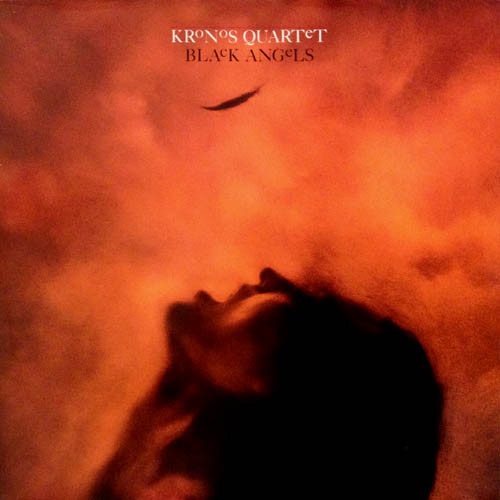
1990

0:11:08
Aulis Sallinen (1935- ): String Quartet No. 3, “Some Aspects Of Peltoniemi Hintrik’s Funeral March”
      from Kronos Quartet (Nonesuch, 1986)
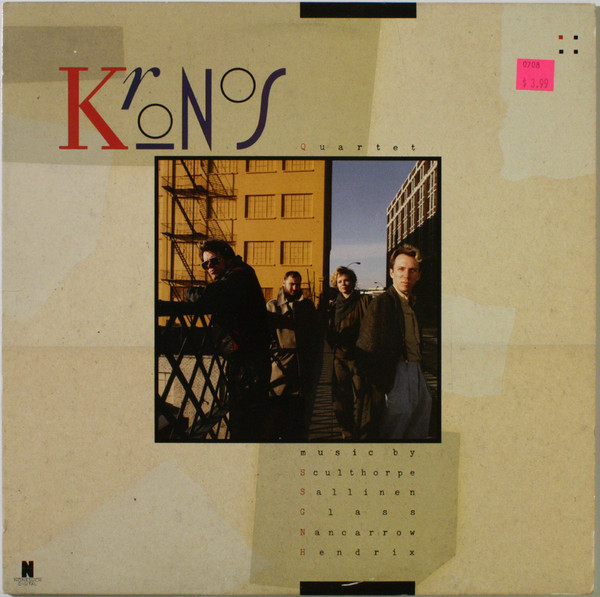
R-2135743-1447647272-6762.jpeg

0:25:14
Sofia Gubaidulina (1931- ): String Quartet #4 (1993)
      from Night Prayers (Nonesuch, 1994)
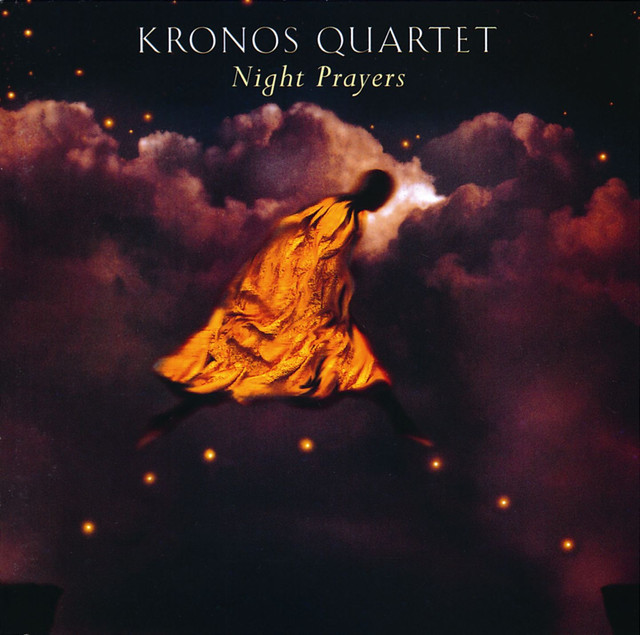
1994

0:37:12
Henryck Gorecki (1933-2010): String Quartet No. 2; 1. Largo Sostenuto – Mesto
      from Gorecki String Quartets 1 and 2 (Nonesuch, 1993)
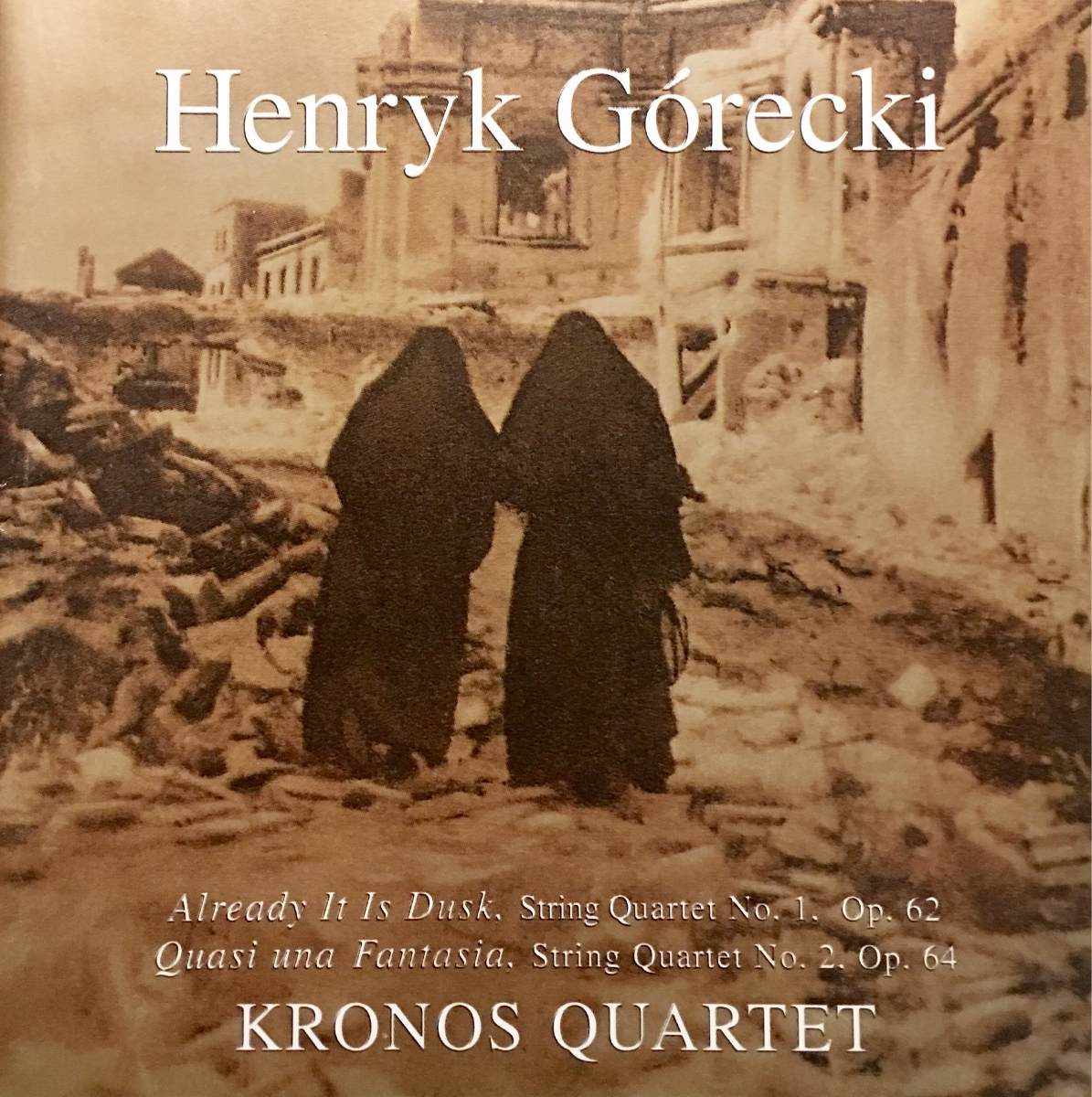
1993

0:45:12
Black Angels, II. Absence

0:50:44
Ben Johnston (1926- 2019): String Quartet No. 4, “Amazing Grace”
      from White Man Sleeps (Nonesuch, 1987)
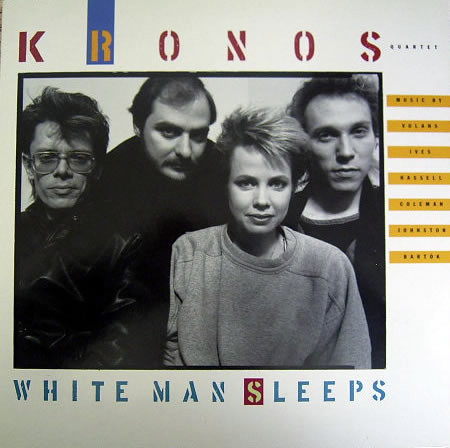
1987

1:02:36
Aleksandra Vrebalov: Chapel, Rainbows
      from Sea Rang Songs (Nonesuch, 2015)
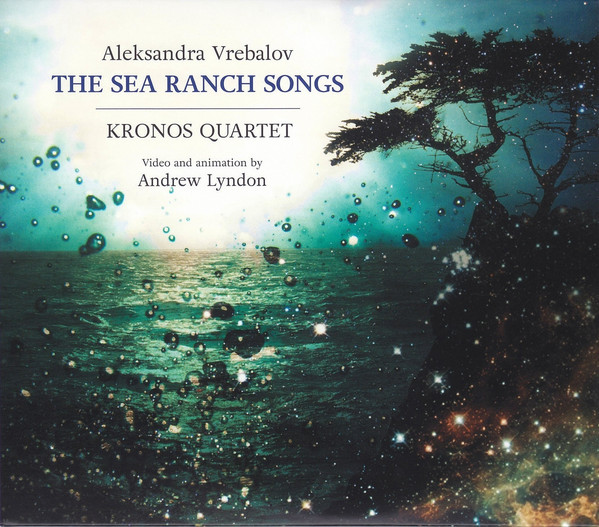
R-9505991-1481752469-5142.jpeg

1:06:30
Vladimir Martynov (1946- ): The Beatitudes
      from Music of Vladimir Martynov (Nonesuch, 2012)
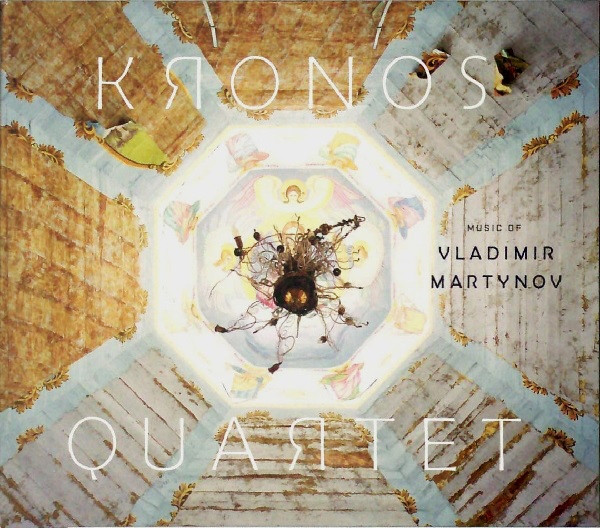
2012

1:12:02
Franghiz Ali-Zadeh (1947- ): Apsheron Quintet – 2. Reverse Time
      from Mugam Sayagi – The Music Of Franghiz Ali-Zadeh (Nonesuch, 2005)
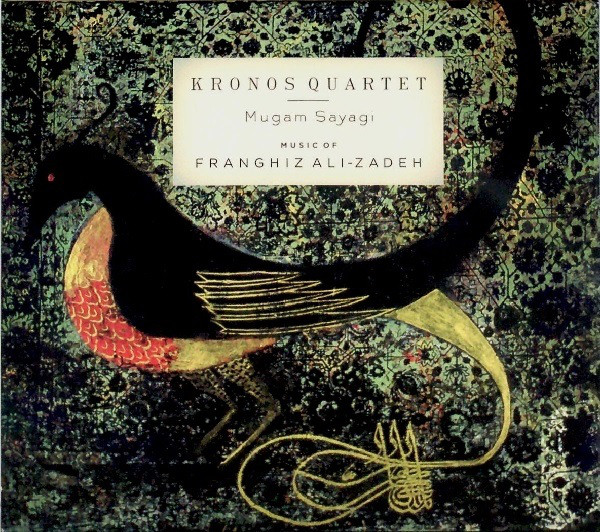
2005

1:19:35
Michael Gortdon (1956- ): “Clouded Yellow”
      from Michael Gordon: Clouded Yellow (Cantaloupe, 2018)
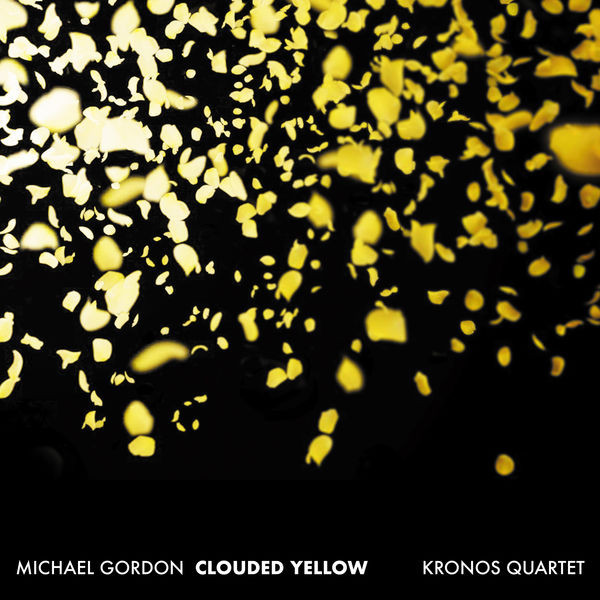
2018

1:29:56
Alexandra Du Bois (1981- ): Oculus pro oculo totum orbem terrae caecat (2003)
      from Under 30 (kronosquartet.org, 2003)
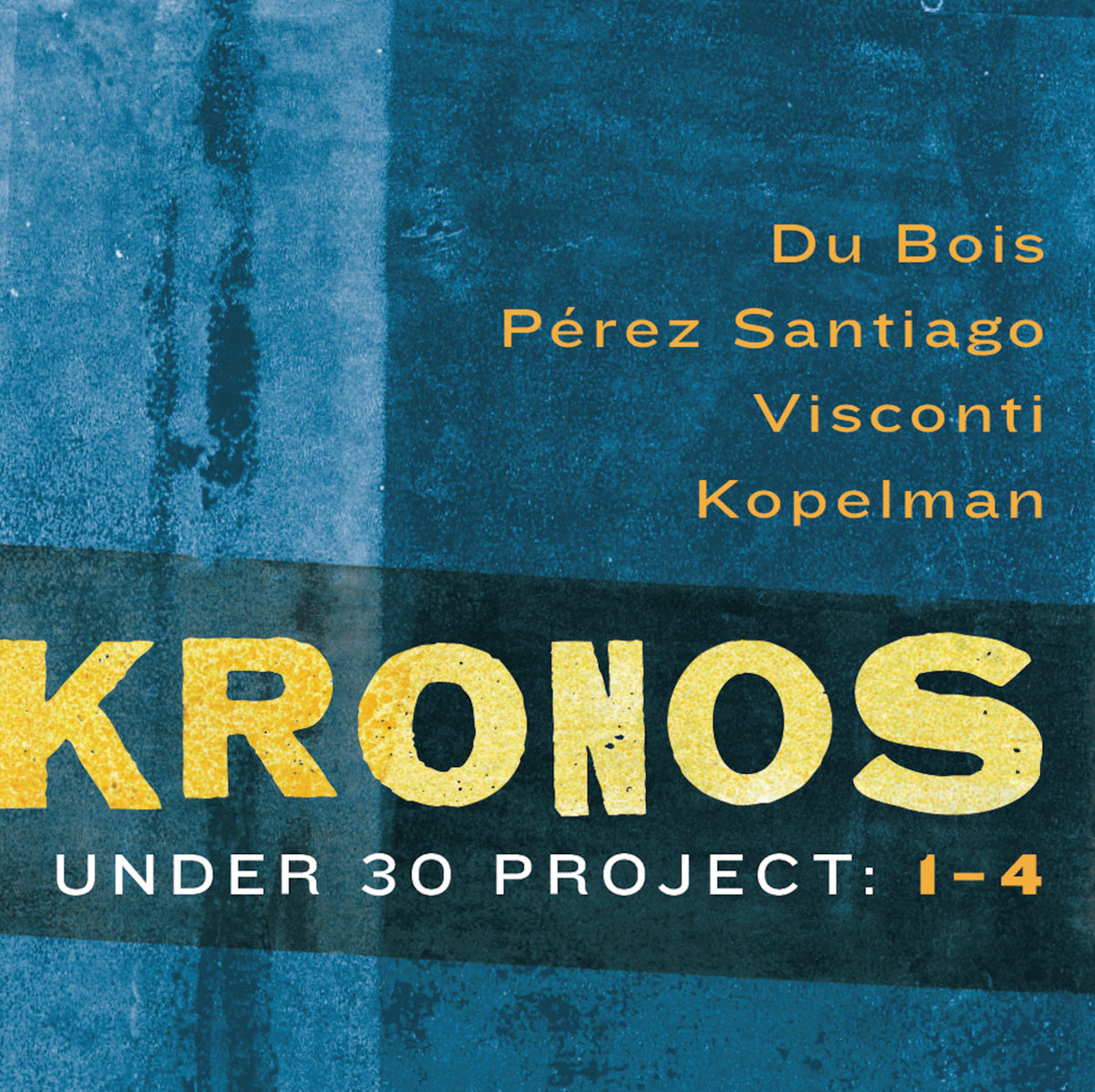
a0051296304_10

1:47:53
Terry Riley (1935- ): Sun Rings, No. 10, “One Earth, One People, One Love”
      from Riley: Sun Rings (Nonesuch, 2019)
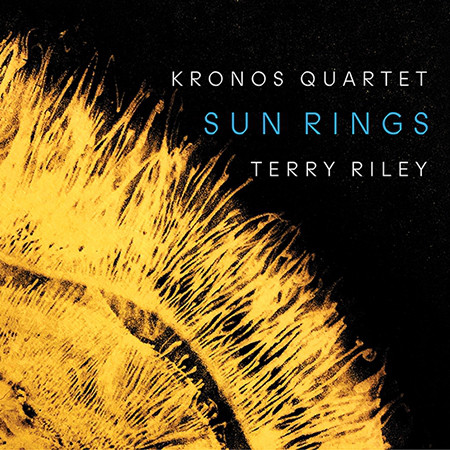
2019

1:56:56
Black Angels, III. Return

2:04:21
István Márta (1952- ): “Doom, a Sigh”
      from Black Angels
CC Mixtape #25: Vienna

No big essay here. I just wanted to say that when I started listening to classical music four years ago, I could find no point of purchase in the Second Viennese School (in effect, Arnold Schoenberg and his two best-known pupils Berg and Webern). The music it produced – based on math, in effect – seemed clinical to me, drab and colorless. It seemed like it was deliberately off-putting. It didn’t help that from my reading I’d come to associate Schoenberg (and still do) with methodical, emotion-devoid people like Boulez and Stravinsky.

Way to the Park by Klimt

But… I found a way in, somehow or other. So I suppose it was really just (another) case of ignorance overcome, sort of the way it took me several years to disassociate Prokofiev from Peter and the Wolf, since I’d assumed he was a dunce based on that piece alone.

Beech_Grove_I_Gustav_Klimt___66728.1501256870

My road into the Second Viennese School was Gustave Mahler, just as it was 120 years ago for the composers associated with the movement. (There was no “First Viennese School” – the term alludes to Haydn, Mozart and Beethoven, composers who knew one another in late-8th C. Vienna but never constituted a “school.”) When I learned that Mahler was sort half god/half human to the Second Viennese School, I found something I could relate to. As with Debussy, it is important to at least recognize that most, if not all, of the composers who contributed real art to the first half of the 20th Century considered Mahler to be both a radical and a font of genius. For my part, Mahler’s 9th Symphony had been a mind-changer vis-avis classical music in general back in the ’80s when I heard it for the first time, and so thinking of the SVS as a Mahler fan club made it easier to approach. (I included an excerpt from my favorite recording of that symphony, but it is the sort of work that is so profoundly beautiful and haunting that it deserves focused and repeated listening, even if it does take up most of two CDs.)

I also found that reversing the chronological order regarding the Second Viennese School was useful in developing an appreciation of these composers. For me at least, starting with Webern and then moving back to Berg (a year younger than Webern, but appreciated sooner) and finally back to Schoenberg was easier than following the timeline forward. Both Webern and Berg wrote music that is (again, for me) much more engaging than Schonberg’s pivotal pieces. I hear melodies in their most uncompromising pieces, but most of all serialism is about the moment. As for Schoenberg, I’ve found pieces of his I listen to and enjoy, though I still associate him with a gray gravity that is not too inviting.

Webern was (I’ve read in several places) a Nazi sympathizer, which was, until recently, one main reason I refused to listen to him at all. I can barely deal with the concept of Germany, let alone its 20th C. history. What makes it too weird is this: Most of his friends and cohorts were Jewish, and the Nazis had labeled his art – like his peers’ – as “degenerate” and, thus, forbidden. It is true Webern paid for his sin in karma bigly: in 1945, an American G.I. saw him light a cig outside his back door, got spooked, and shot him dead. (“What’djado in the war, daddy?”) Finally, I just read enough about Webern’s enormous influence on composers I love that I developed a rationalization that has allowed me to listen to Webern’s music. In sum, I think that, like many transcendent artists, Webern was a peripheral soul, detached, perhaps on the autism spectrum, and so I give him a pass.  Tacit Nazi sympathizer is not a star on his resume, certainly, but then the last few years here in the U.S. have brought home the fact that it is not really fair to blame artists – at least lesser-known ones like Webern (his reputation as a great master came about posthumously, in the ’50s and ’60s) – for the actions of their political leaders.

I’ve come to really like Webern.  (The Nazi thing keeps me from saying “love.) He’s a miniaturist and should be approached that way.  His pieces are short – his lifetime’s work would fit on a couple CDs – and so they’re easy to listen to repeatedly, which is sort of what it took, for me at least. The Naxos CD from which the Webern piece on this mixtape derives was what finally sold me on Webern. A Japanese guy conducting a Northern Ireland orchestra… go figure.  Somehow it is perfect. It feels like a Joy Division album – maybe from back when they were Warsaw – inky dark and gritty.

The Alban Berg violin concerto is the first long 2nd Viennese School work I really took to, and it leaves no doubting the composer’s genius. It uses serial methods in the service of real anguish (it was dedicated to the dead daughter of Alma Mahler, but melodies take shape in flits and shards. I’d also recommend watching part or all of Wozzcek, his opera, on Youtube.

The works of lesser-known SVS people were also enlightening. Egon Wellesz is one such, a man whose name I learned via Youtube. There is a group of channels on Youtube – one guy? twenty? – called Wellesz; all these sites do is present much or most of the 20th Century’s greatest works by the greatest composers you’ll never hear on a radio into Youtube videos.  I have been able to find 80% of the music I’m looking for, no matter how obscure, on a Wellesz site. (Wellesz (and some other classical Youtube stations) and Wikipedia are about the only positives I can draw from the internet at this point…) So I was favorably prepossessed to appreciate the composer whose name (I assume) inspired such an effort, and the payday was in fact immediate: The piano piece herein, the first thing I heard by him, is insanely beautiful. Wellesz is yet another composer who should be far better known.

Field-of-Poppies-1907

The later artists on this mixtape are ones I’ve been fans of for some time – G.F. Haas (b. 1953) and Beat (pronounced Bay-yacht) Furrer (b. 1954), founder of the premier new music ensemble Kangforum Wien, are the two Austrian Masters working today. Peter Jakober (b. 1977, the year punk died) is a younger man, a student of Haas’s, with a new album on Kairos, the great contemporary Austrian record label.

Finally, a word about these “Mixtapes.” They are not meant to be definitive of anything or any composer. They are not supposd to be educational, particularly. They are just comps of pieces that resonate with me. I approached this music at the outset with nothing but the ears on my head and the brain in between them. The music has changed my life for the better in ways it would be pointless to try to describe. It’s become my place of refuge from the shrill, keening tornado of shit the world has become.

Some years back, in the early part of this bleak century, I was (and remain) deeply impressed by a series of, in effect, “mixtape” CDs – Deep Soul,  volumes 1-4 – by the British soul music aficionado Dave Godin (RIP). I’ve tried to take the same approach to modern classical music. Godin did not select “greatest hits” for his (totally essential, if you’re a fan of ’60s Southern soul) mixes necessarily, although he included “hits” when they fit.  Rather it was the unworldly nature of the particular piece that warranted its inclusion.  In the case of a lot of these pieces, the rest of the record – even the other movements in a piece – might be vastly less interesting, and the composer may have few or no other works in his or her discography one fifth as interesting…  but that doesn’t diminish the piece (or the movement within a piece).  It’s the art – the music – that counts. It makes no real difference whether you’re familiar with the technical terms. You can enjoy paintings without knowing the theories of light and color the artist was trying to manifest, and nobody calls you a layman. Same goes for all the other art forms. The main point of these collections – aside from keeping alive (in a wee, wee way) the names of geniuses who are, in many cases, fading into oblivion – is just the music.  I’m not saying learning and knowing about some music theory is a bad idea, just that it’s not the point.

I hope you can listen to and enjoy all or most of the music on this and other Mixtapes in that context.

0:00:55 Arnold Schoenberg: Pierrot Luniere; 1. Mondestrunken
  Anne-Lise Bernsten w/ Christian Eggen: Borealis Ensemble
    (Victoria)

farm-garden-with-sunflowers-around-19051906

0:02:52 Egon Wellesz: Der Abend, I. Pastorale
  Margarete Babinsky
    (Capriccio)

0:06:04 Beat Furrer: Enigma 1
  Nils Schweckendiek: Helsinki Chamber Choir
    (Toccata)

0:09:24 Gustav Mahler: Piano Quartet
  Kremerata Baltica
    (Deutsche Grammophon)

0:20:24 Zemlinsky: Trio for Clarinet, Cello and Piano in D Minor, Op. 3; II. Andante
  Othmer Muller (c), Ernst Ottensamer (cl), C. Hinterhuber (p)
    (Naxos)

0:29:32 Alban Berg: Violin Concerto, II.
  Anne-Sophie Mutter w/ James Levine: Chicago Symphony Orchestra
    (Deutsche Grammophon)

Gustav_Klimt_-_Litzlberg_am_Attersee

0:46:30 Anton Webern: 6 Pieces
  Takuo Yuasa: Ulster Orchestra
    (Naxos)

0:58:19 G.F. Haas: last minutes of inhumanity
  Ilan Volkov: BBC Proms Orchestra
    (Youtube)

1:06:03 Peter Jakober: Puls 2
  Bas Wiegers: Klangforum Wien
    (Kairos)

Gustav_Klimt_Multi_SRKM-17183-205_Cotton_Fabric_by_Robert_Kaufman_2

1:14:53 Mahler: Ninth Symphony, IV. (excerpt)
  Carlo Maria Giulani: Chicago Symphony Orchestra
    (Deutsche Grammophon)

1:22:33 Furrer: String Quartet No. 3, bar 500-679
  KNM Berlin
    (Kairos)

1:40:30 Mahler: Symphony No. 2 in C Minor, Resurrection; IV. Urlicht
(arr. for voice and organ)
  Anne Sophie von Otter (mezzo soprano) w/ Bengt Forsberg
    (BIS)

Happy 100th, Galina Ustvolskaya!


ustv_tv A

Today, June 17 of 2019, marks the 100th anniversary of one of the great musical artists of the 20th Century, Galina Ustvolskaya.

She is a composer near to my heart. When I was offered a 2-hour radio show 3.5 years ago, I decided on a classical format mainly because I thought the station needed a classical show. I didn’t know enough names to fill the the first 2-hour show. And so it was (I truly believe) providence that I came across the 6th piano sonata by Galina Ustvolskaya via a Youtube sidebar recommendation. I’d of course never heard of her and the name wasn’t in the reference books I had at the time (although she’s mentioned once in Alex Ross’s The Rest Is Noise .) It is like music I love in other genres – unmistakably the work of an outsider who could not give a f*ck what anyone thinks, and most importantly, an assault from the first moment of its existence, it’s parallel universe music. At least, the work that survives her.

For a long time, I took her small body of work – there are 25 works on her approved opus list – as further proof of her otherness. In fact, Ustvolskaya wrote drek, just as greats like Shostakovich, Alfred Schnittke and Miecszylaw Weinberg cranked out drek. It was required of working Soviet composers. Unfortunately for those guys, their drek lingers on in their catalogue. It’s still out there and still being recorded by well-intentioned musicians. Ustvolskaya, on the other hand, simply disowned her drek, refusing to acknowledge it in her catalogue, and so her drek simply evaporated into the ether.

Otherwise, like her peers in the Soviet orbit, her great early work in the ’40s and ’50s went straight to the desk drawer, where it would be safe from the prying ears of Soviet music censors until (conceivably) more enlightened times returned.

I’ve only heard one disowned “Social Realist”-friendly work of Ustvolskaya’s, a 10-minute “Children’s Suite”. It is definitely worth hearing but overall pretty “meh”. Imagine if Franz Kafka had written a children’s book and you’ll have an idea of it.

Like most important Soviet composers of her time, Ustvolskaya is linked in many people’s minds to Shostakovich. From 1937 to ’47, Ustvolskaya was Shostakovich’s student at the Leningrad Conservatory, and for eight years after that, until Shostakovich’s second marriage, they were peers: at one point Shostakovich called her his “musical conscience” and sent her his works to critique before he submitted them to his publisher.

Like a lot of people, Ustvolskaya probably lived too long, and in the end her bitterness at being forever linked to Shostakovich seems to have gotten the better of her. In her old age and long after she ceased composing, she dismissed both the man and his music in deeply disparaging terms. Shostakovich, who died in 1975, could not respond to her allegations, which amounted to, I suppose, a soft form of psychological battery, in her telling.  The fact remains the two were close associates for 18 years. Thanks to the nature of Soviet life under Stalin – people were disinclined to write memoirs, let’s say – scholars are left to parse a few quotes or lines from letters. It is generally accepted that Shostakovich proposed marriage to Ustvolskaya at one point (and possibly twice) and that she rejected him; others contend Shostakovich dumped her when he married his second wife in ’55. Either way, it is likely their split was acrimonious, as it is likely that acrimony colored her late-life reflections.

Her frustration with the Shostakovich association is understandable, nevertheless. While constant references to Shostakovich are annoying and lazy in regard to Soviet composers like Mieczslaw Weinberg, in the case of Ustvolskaya such references are almost entirely off base. Dismissing Ustvolskaya as a Shostakovich “student” tells more about how the laziness of the writer: it is comparable to calling Thelonious Monk a Duke Ellington clone. No. Her mature work, from the 1950s up to her 5th symphony of 1990, bears no resemblance to Shostakovich.* I suspect, as with Weinberg’s, her musical relationship with Shostakovich was a lot more 2-way than many presumed.  Shostakovich in fact wrote of her influence on his work, while acknowledging she took none from him. There’s a theme in her early “Trio for clarinet, violin and piano” (1949) that Shostakovich famously (in a manner of speaking) quotes in several pieces (his 5th string quartet and the Michelangelo song set). But I think Shostakovich fans might recognize Ustvolskaya’s tone – a bleakness in which lightness is swallowed whole – as well as a couple techniques (the pleading, single-note violin bleat, for one) in his works in the ’60s and ’70s.** I think it’s safe to say Shostakovich is or will be regarded as his century’s greatest composer; that doesn’t mean he invented everything out of empty space. Which is to say he would of course be influenced by geniuses like Ustvolskaya and Weinberg.

Ustolskaya’s surviving music is immediately identifiable as her own and stymies comparison, in the way Gloria Coates’ and other outsiders’ music is. You might not LIKE it (and it’s worth a glance at the comments beneath several of her Youtube vids), and even diehard fans (I’m the only one I know) will concede two hours of Ustvolskaya’s music is a LOT, but you can’t doubt its sincerity. In Ustvolskaya’s case, the music is often forceful – punishing, sometimes – and terse; moments of delicate beauty are not infrequent, though they tend to be subsumed by blunt blows to the back of the skull, metaphorically speaking.

These days if you want to hear Ustvolskaya’s music, you have to go to Youtube as often as not; very little of it is available legitimately. (Much of this mixtape is cribbed from YouTube.) A series of Megadisc CDs issued in the ’90s, featuring Oleg Malov and St. Petersburg musicians in U-sanctioned (and so, definitive) performances, is out of print. Reinbert de Leeuw and the Schonberg Ensemble recorded a smattering of stuff in the ’90s that is likewise out of print. In this decade, Patricia Kopatchinskaya has championed Ustvolskaya’s violin music in concert (she curated a California festival last year that amounted to an Ustvolskayfest) and on an essential 2014 set for ECM New Series, with Markus Hinterhäuser and Reto Bieri. And Natalia Andreeva recorded all of the works for solo piano in a similarly essential set for the Grand Piano label from 2015.

But unless Google is messing with me, NO recordings of her five symphonies are in print today. And aside from the recordings made by the artists listed in the previous paragraph, there are very few pieces that have been recorded more than once by anyone. The fact that not a single orchestra or label has embarked on an effort to present hi-fi accounts of her wee redacted oeuvre is, on the one hand, astonishing – given the undeniable genius it represents – and on the other, perhaps, telling, given its overall uncompromising nature and, in the symphonies, its sometimes frightening existential Christianity. Still… it seems like a logical move for some bold-ish record label. BIS? C’mon now! I think all five symphonies would fit on a single CD…

Finally, there are a couple great websites for information on Ustvolskaya, her work and extant recordings. One site is called Music Under Soviet Rule, maintained by the University of Southern Illonois at Edwardsville (!) (http://www.siue.edu/~aho/musov/musov.html (also with outstanding entries on Shostakovich and the controversy surrounding his memoirs as well as onVainberg/Weinberg, Prokofiev and Kancheli.) The other site is Ustvolskaya.org. It has correpondence, photographs, manuscripts, and her approved compostion list. Most of what I’ve written here, fact-wise, is culled from those sites. Both sites have excellent bios in the 1000-word range.

_______________________________________

* It is true that the Op. 1 in her redacted opi list, the 1946 piano concerto she wrote as a graduation project begins with so Shostakovich-y a theme I always forget it’s her when it pops up unexpectedly in an iTunes shuffle; but even then, by the third of its four movements the writing is stark and driven by a thick, pounding rhythm, clearly pointing to where she would go. It could be regarded as a manifesto, in a sense, whether that was her intention at the time or not. (I suspect she did.)

** Listen to the 12th (second movement) and 13th string quartets and see what you think…

0:00:05
Grand Duet for Cello and Piano (1958), pt. 1
  Mstislav Rostropovich (c) w/ Alexei Lubimov (p)
        (EMI)

0:03:33
Symphony No. 1 for orchestra and 2 boys’ voices (1955) (excerpt)
  Dmitri Liss: Ural Philharmonic Orchestra
        (Megadisc)

0:06:17
Piano Sonata No. 1 (1947); IV
  Natalia Andreeva
        (Grand Piano, 2015)

0:09:56
Trio for Clarinet, Violin and Piano (1949), movements II and III
  Patricia Kopajinkskaya (v), Markus Hinterhäuser (p) & Reito Bieri (cl)
        (ECM New Series, 2014)

0:18:48
Octet for 2 oboes, 4 violins, timpani and percussion (1949-50), 3rd movement
  Reinbert de Leeuw: Schonberg Ensemble
        (hatART)

21:30
Grand Duet, pt. 2

0:24:07
Symphony No. 1 (excerpt)

25:50
Composition No. 1 (part 1) for piccolo, tuba and piano (1971)
  Oleg Malov: The St. Petersburg Soloists
        (Megadisc)

32:45
Sonata for violin and piano (1952)
  Patricia Kopatchinskaya & Markus Hinterhäuser

41:25
Octet for 2 oboes, 4 violins, timpani, and piano, movements 4 & 5

46:18
G
rand Duet, pt. 3

49:21
Symphony No. 1 (excerpt)

50:40
Symphony No. 3 “Jesus Messiah, Save Us!” for reciter and small orchestra (1983)Text by Hermannus Contractus
  Alexei Petrenko (reciter) w/ Munich Philharmonic conducted by Valery Gergiev.
BBC Proms, 08.22.2016

1:06:02
Composition No. 2, “Dies Irae” for eight double basses, piano and cube (1972—1973), pt. 2

1:09:25
Grand Duet, pt. 4

1:11:15
Piano Sonata No. 6 (1988)
  Oleg Malov

1:19:09
Symphony No. 5 “Amen” for reciter (man), violin, oboe, trumpet, tuba and wooden cube (1989—90)
  Dmitri Liss w/ the St. Petersburg Soloists
(Megadisc)

1:33:08
Grand Duet, pt. 5

CC Mixtape #23: U.K. Women Composers


0:00
Rebecca Clarke (1886-1979): Morpheus
  Philip Dukes (viola) & Sophia Rahman (p)
Rebecca Clarke: Viola Sonata, Dumka, etc. (Naxos, 2017)

0:07:09
Imogen Holst (1907-1984): Phantasy (String Quartet)
  Simon Hewitt Jones & David Worswick (violins), Tom Hankey (viola) & Oliver Coates (c)
Imogen Holst: String Chamber Music (NMC, 2017)

0:17:00
Judith Weir (1954- ): Piano Concerto, I.
  William Howard (p) w/ Schubert Ensemble
Weir: Piano Concerto, Distance & Enchantment, etc. (NMC, 2003)

0:25:00
Ethel Smyth (1858-1944): Violin Sonata in A Minor, Op. 7; I. Allegro moderato
  Clare Howick (v) & Sophia Rahman (p)
British Women Composers (Naxos, 2008)

0:35:22
Grace Williams (1906- 1977): Severn Bridge Variations
  van Steen: BBC SO
New Music Collections, v. 1 – Orchestral (NMC, 2014)

0:39:54
Elizabeth Maconchy (1907-1994): Theme & Variations for Violin and Cello (1951)
  Renate Eggebrecht (v) & Friedmann Kupsa (c)
Duets for Cello and Violin ( Troubadisc, 2002)

0:47:49
Ruth Gipps (1921-1999) : Symphony No. 4, Op. 61; IV. Finale; Andante
  Rumon Gamba: BBC NO of Wales
Gipps: Symphonies 2 & 4, etc. (Chandos, 2018)

0:58:38
Thea Musgrave (1928- ): Canta, Canta (arr. H. Vidovich for flute, cello and piano)
  Marsyas Trio
In the Theatre of Air (NMC, 2018)

1:02:10
Elizabeth Lutyens (1906-1983): Chamber Concerto, Op. 8
  Jane’s Minstrels
(NMC, 1993)

1:10:03
Cecilia McDowell (1951- ): “Come Home, Little Sister”
  Hilary Campbell: Blossom Street
This Day; Celebrating a Century of British Women’s Right to Vote (Naxos, 2019)

1:15:56
Roxanna Panufnik (1968- ):
  BMF Piano Trio
Landscape of Memories – Polish Piano Trios (Accord, 2013)

1:25:01
Sadie Harrison (1970- ): Traceries
  Kreutzer Quartet
Harrison: Taking Flight (Metier, 2000)

1:32:27
Kate Whitely (1989- ): 3 Pieces for Violin and Piano, no. 2
Eloisa Fleur-Thom (v) and Kate Whitely (p)
Kate Whitely: I Am I Say (NMC, 2015)

1:36:58
Errollyn Wallen: Cello Concerto
  Matthew Sharp (c) w/ Nicholas Kok: Orchestra X
Wallen: Photography (NMC, 2016)

1:59:12
Elizabeth Maconchy: Symphony for Double String Orchestra; II. Lento
  Vernon Handley: London Symphony Orchestra
Maconchy: Orchestral Works (Lyrita, 2007)

2:05:44
Rebecca Clarke: Piano Trio
  Storiono Trio
Schumann, Clarke & Vietor: Piano Trios (Ars Produktions, 2014)


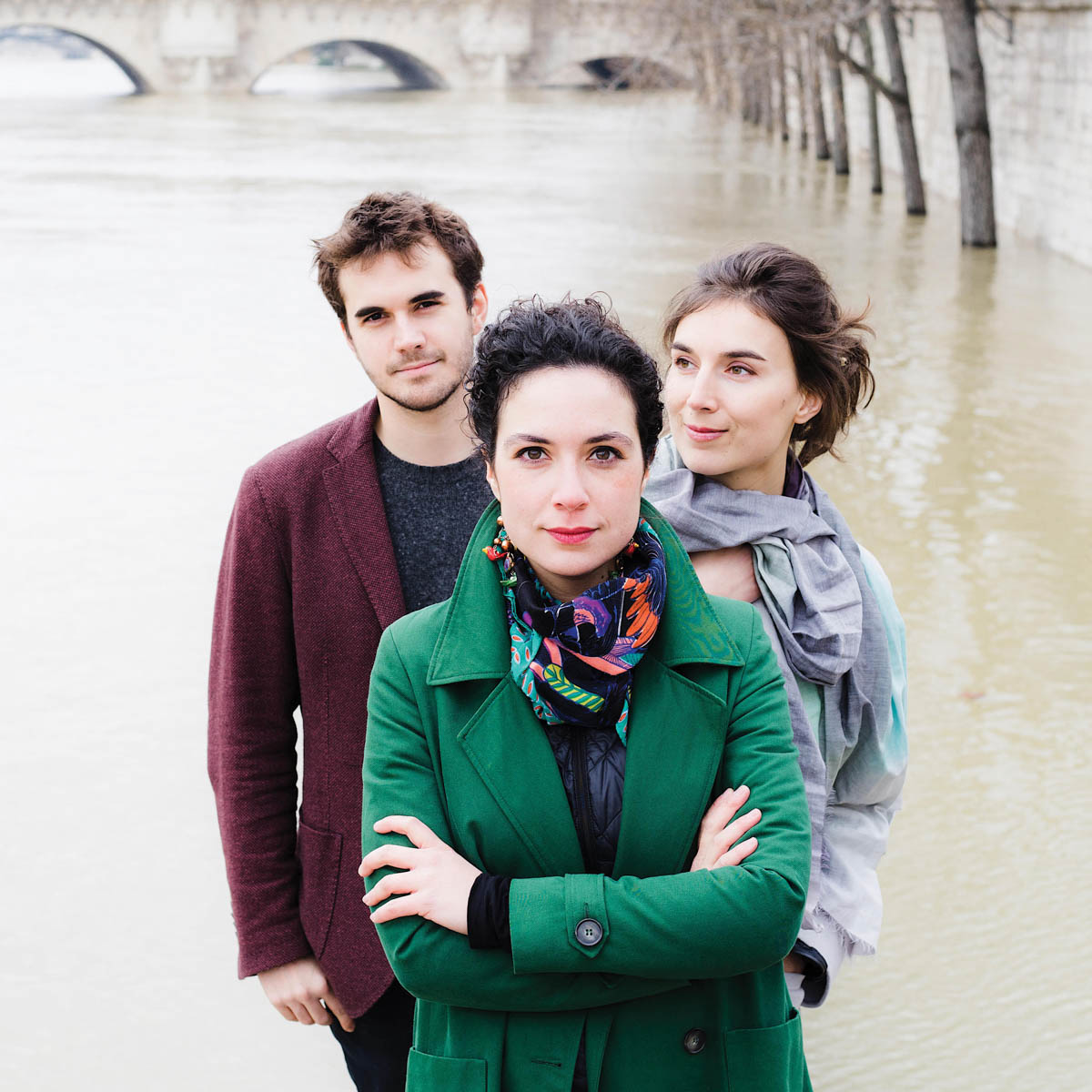
Trio Karénine @ ACMS Asheville, NC Sunday, January 13

Trio Karénine @ Unitarian Universalist Church, Asheville
Sunday, January 13
        Robert Schumann: Piano Trio (No. 2) in F Major, Op. 80
        Mieczyslaw Weinberg: Piano Trio, Op. 24
        Maurice Ravel: Piano Trio in A Minor

acms-trio-karenine_-press-photo.jpg-trio-karenine.-photo-by-lyodoh-kaneko

” Nothing is better than music. When it takes us out of time, it has done more for us than we have the right to hope for. It has broadened the limits of our sorrowful lives; it has lit up the sweetness of our hours of happiness by effacing the pettiness that diminishes us, bringing us back pure and new to what was, what will be, and what music has created for us.”

It was Nadia Boulanger, the great Paris-based composition teacher and sister of Lili, the might’ve-been-great composer, who said or wrote that. I am pretty sure it’s accurate: I cut it out of a newspaper letter-to-the-editor. It seems appropriate as an intro to this review because Trio Karénine, the performers under consideration, are Paris-based, and also because they took me – and I think most of the audience – out of time last Sunday.

In the classical music journals I read like Fanfare and the American Record Guide, it is an often-read dis leveled by curmudgeons at youngish (Millennial generation) performers: That their technical prowess may be breathtaking but that the end product is soulless, presumably because they grew up listening to pop music and watching TV. I would refute this dis (which is hardly unanimous, thankfully) by telling the curmudgeon to go check out the Trio Karénine. And then shut up.

Formed in 2009, they are a fresh-faced trio from Paris who’ve been winning prizes around the continent for much of this decade (a decade that can not end soon enough, but I digress…), comprised of Fanny Robilliard on violin, Louis Rodde on cello, and Paloma Kouider on piano. Taking the floor for the afternoon concert, Trio Karénine eschewed the formal evening wear, opting for duds that evinced a casual elegance, which is a good way of describing the way they go about their business. On their first tour of the United States, they presented three substantial works, each in the half hour range, and they performed magically. They definitely rearranged time. The time glided by like a flock of swallows.

Trio Karénine has released two CDs on the French Mirare label, the first of which contains Robert Schumann’s first two piano trios. Number 2 was the show opener in Asheville. It is a failing of mine (let’s say) that music from Schumann’s era (mid-19th century) elicits no real response. I hear it – it was easy on the ears and the half-hour glided by – but I was there for the two pieces that followed.

Weinberg (aka Vainburg on some labels or programs) is a composer whom I love and play quite often on my radio show. His story is as tragic as the mid-century history of his native Poland: The young Weinberg fled the arrival of the Nazis, heading east to the Soviet Union, which under Stalin was only slightly less anti-Semitic than Hitler’s Germany. The family who stayed behind were all slaughtered by the Nazi pigs. Weinberg was lucky enough to make the acquaintance of Shostakovich in Soviet Russia. The two became close friends, often performing each other’s piano works in concert and performing 2-piano repertoire together. In the years after the war and before Stalin’s death, Shostakovich protected Weinberg from persecution. (Stalin, who by conservative estimates killed 100 MILLION of his own people, was planning a Jewish Holocaust all his own at the time of his death in 1953.)

A dis often leveled at Weinberg in the American classical music journals I read is that the Pole was little more than a slavish imitator of the Shostakovich. Perhaps it is because I am NOT versed in the technicalities of composition I would say that assessment is both lazy and drastically wrong in terms of the art the two men produced. In fact, I suggest the relationship with Shostakovich (who was indeed the GOAT, don’t get me wrong) was far more reciprocal. First of all, Shostakovich didn’t hang with toadies – the composers he spent time with – like Boris Tishchenko and Galina Ustvolskaya – were top-tier geniuses. Moreover, I would contend Shostakovich’s frequent post-WWII use of Jewish themes and subject matter owes a lot to his friendship with Weinberg. And perhaps – could it BE? – the darkness, absurdism and sarcasm in many of Weinberg’s compositions was his own and not something he cribbed from Shostakovich? Personally, I don’t see how anyone who knows the history of Eastern Europe in the 20th Century, let alone LIVED it, could be anything other than bleakly pessimistic… Calling Weinberg a Shostakovich rip-off, in short, is like calling the Sex Pistols a Ramones rip-off, or Elmore James a Robert Johnson rip-off, which is to say: No.

This misappraisal of Weinberg is mostly a moot issue in Europe, where he is increasingly recognized among the mid- and late-century’s major composers now that the body of work he produced behind the Iron Curtain (he died in 1996) has gained currency. These days, Weinberg’s symphonies are the featured works in concerts of top European orchestras, and personally I consider many of his large-scale works among my very favorite concertos and symphonies. That said, his piano trio is not one I’d listened to much or that I’d have ever included in a list of my favorite Weinberg works. Written in 1945 in the immediate aftermath of the war – and the loss of his family and a beutal 4-year Nazi invasion that saw tens of millions perish – the general tone is anguish, which alternates between agitation and dense melancholia. Like Shostakovich, Weinberg could produce subtle and beautiful melodies at will, but except for a lovely but stunted theme at the opening of the third and conclusion of its fourth movements, the piece feels more like the severe 12-tone music of Webern, harsh and angular, than anything else. Trio Karénine, which regularly plays Modern-era composers (Rihm, Henze and Hersant, e.g.) in recitals on their own turf, played the Weinberg trio with an urgency and vigor that completely sold me on it. (The fact that they are young, attractive and cool may have had something to do with it, too.) The tension I sensed in the hall – this was difficult music for a Schubert/Mozart/AARP crowd – was, apparently all in my imagination, as Weinberg got a standing-O. I felt something weird – a smile? – happen to my face.

Ravel’s lone piano trio, the post-intermission headliner for the afternoon’s program, is a piece I do know well, or at least have heard many, many times by different performers, and I love it. (My favorite recording to this point is by the Trio Fontenay, on Teldec.) The third, Passacaglia movement is about as hauntingly beautiful as music gets. I had in fact already watched the Trio Karénine play that third movement several times, thanks to Youtube. The acoustics in the U.U. church, I have to say, was a whole lot better than in the vast cathedral where the vid was recorded, even if the visuals were considerably less impressive.

I think violinist Robilliard, in her introduction to the Ravel trio, was being politely disingenuous when she said the group was a little nervous about playing a work by their great countryman on foreign soil. It seemed from my back-row perch that Trio Karénine knows the piece so well it’s woven into their DNA. They rarely glanced at their sheet music; most of the time, in fact, all three had their eyes closed, firm-lipped commitment on their faces. The brooding, rumbling piano melody that solos for the first :36 of the third movement, the subsequent entry of the cello, and the violin’s entry at 1:12 were handled perfectly; it’s a piece rife with oblique subtleties and Trio Karénine finessed it home. They are all three interesting to watch, but I spent much of my time watching the pianist Kouider, who likes to lean way back and play the one-handed parts like she’s in a deep groove. She was – they all were – in a deep groove; the Ravel trio is Deep Soul, French-style, and that’s how it came off.

I was sad when it was over, and I was apparently not alone as the applause was loud and long enough to get an encore, which was one of those Bugs Bunny hyper-virtuoso things, Flight of the Bumblebees, I think it was… I kinda wanted the Ravel piece to linger in my noggin so I fogged out.

If you want to get an idea of what I’ve been babblin’ ’bout, there are a number of clips on YouTube. I’d avoid the Ravel one for its swallowed-up sound and would recommend this clip from Shostakovich’s second piano trio: 

Trio Karénine included the Ravel trio, along with trios by two other French geniuses, Gabriel Fauré and Germaine Tailleferre, on its second CD, also on Mirare, released a year ago. They were selling them in the meeting room Sunday but they sold out before I could work up the courage to spend $20 for a CD; I have since ordered it from a distributor in England. I can not imagine, after seeing Sunday’s performance, that is less than outstanding.

CC Mixtape #21: Microtonal Mix

Microtones are best understood by laymen such as myself as the infinite number of notes BETWEEN the 12 keys that make up an octave on a piano. They are easy enough to play – physically – on wind and string instruments or with the human voice. Microtonal works for keyboard, on the other hand, require specially-built or else “modified” instruments.

Inspired by discoveries of Eastern music as well as by the formal freedom unleashed by the 12-tone composers in the early modern era, many of the 20th century’s great composers employed microtones for various effects. They can be hauntingly pretty, as in the Enescu and Panufnik pieces that bookend this mix, they can be used as sour-sounding bludgeons, and they can be everything in between. Some composers, notably Ives and Bartok, used microtones to reproduce sounds they heard in the field, while remaining tonally anchored. Others, like Julián Carrillo, Alois Haba and Ben Johnston, built their oeuvres around microtones. And then there’s Harry Partch, who created a 43-tone octave and built a phalanx of instruments to play the music he wrote. This mix includes a Baroque-era piece by Nikola Vicentino and two movements from the American composer Gloria Coates’s “Symphony in Microtones,” aka her 14th. I hope you like some or all of it.

                                                                                                          paintings by Maximillian Luce (1858-1941)

luce

0:00:00
George Enescu (Romania, 1881-1955): Violin Sonata #3, Op. 25 – 2. Andante Sostenuto E Misterioso
  Adelina Oprean (v) & Justin Oprean (p)
        Hyperion

enescu la paris

_________________________________________________________
0:08:28
Nicola Vicentino (Italy, 1511-1876)” Musica prisca caput (1555)
  Johannes Keller, Archicembalo
        ?

mi0002864177a

_________________________________________________________
0:11:19
Julián Carrillo (Mexico, 1875-1965): Cromometrofonía
  ?

julian-younga

_________________________________________________________
0:20:00
Charles Ives (U.S.A., 1874-1954): Three Quarter-Tone Pieces for Piano(1903-1923), No. 3 “Chorale”
  Alexei Lubimov & Pierre-Laurent Aimard
        Erato

charles-ives-a

_________________________________________________________
0:24:24
Ivan Wyschnegradsky (USSR, 1893-1979): Troisième Fragment Symphonique, Op.32 (1961)
  Martine Joste, Sylvaine Billier, Jean-François Hessier & Jean Koerner
wyschnegradsky_2a

_________________________________________________________
0:38:10
Bela Bartok (Hungary, 1881-1945): Sonata for Solo Violin, Sz. 114 (1944)
  Viktoria Mullova, violin
        Hungaroton
bartok 02a

_________________________________________________________
00:43:42
Alois Hába (Czech Republic, 1893-1973): Sonata for Quarter-tone Piano, Op. 62, 1 – Allegro agitato
  Vladimir Koula, quarter-tone piano
        Supraphon
habaa
__________________________________________________________

0:49:22
Harry Partch (U.S.A., 1901-1974): Windsong
  Harry Partch
        Columbia
harry-partch-music-composition-1943-1944-1950_250x250a

_________________________________________________________
0:57:59
Giacinto Scelsi (Italy, 1905-1988): Anahit
  Hans Zender: Klangforum Vien
        Kairos
Giacinto Scelsi in una fotografia degli anni Trenta

_________________________________________________________
1:11:31
Luigi Nono (Italy, 1924-1990): Ricorda cosa ti hanno fatto in Auschwitz (1966)
  Stefania Woytowicz, soprano w/ Coro di voci bianche del Piccolo Teatro di Milan
        Wergo
luigi_nono_(1970)a
_________________________________________________________
1:22:42
Ben Johnston (U.S., 1926- ): String Quartet No. 5 (1979)
  Kepler Quartet
        New World Records
johnston1966a

_________________________________________________________
1:36:18
Gloria Coates (U.S., 1938?- ): Symphony No. 14 (Symphony in Microtones);
                                                    II. Jargon – Homage to William Billings & III. (1746-1800)
                                                    III. The Lonesome Ones – Homage to Otto Luening
  Christoph Toppen: Bavarian Radio Symphony
        Naxos
glocoatesa

_________________________________________________________
1:50:55
Andrzej Panufnik (Poland/U.K., 1914-1991): Kolysanka (Lullaby)
  Lucasz Borowicz: Polish Radio Symphony Orchestra
        CPO
panufnika

Brooklyn Rider @ BMCM + AS Asheville,NC November 7, 2018

Brooklyn Rider

Brooklyn Rider: Healing Modes
at Black Mountain College Museum + Arts Center
120 College St. in Asheville, North Carolina
November 7, 2018

review by Don Howland/OM (Sundays, 8-10 p.m.)

Brooklyn Rider’s performance at the Black Mountain College Museum last week was about as fresh as classical music gets, and I am using the term in the Kurtis Blow sense. Each of the five short pieces that constitued the first half of the program was by a still-moist American, four of them women and four of them “non-white” in case you’re an NPR listener. All were commissioned by or on behalf of Brooklyn Rider; four were premiered this year, with two of them debuted just five days before. It can’t get fresher than that. Add to that the fact that the concert was held in BMCM’s 2-month-old space at 120 College Street – a roomy exposed brick and white ductwork-ceiling joint that dwarfs the old facility without sacrificing vibe.

Brooklyn Rider, the string quartet arm of the Jacobsen brothers’ hep-classical empire (the other arm being the Knights chamber orchestra; they also work in Yo-Yo Ma’s Silk Road Ensemble) is cut from the fabric spun by the Kronos Quartet some forty years ago. Like the KQ, Brooklyn Rider take on far-flung works, play off-the-beaten-path venues and plunge into collaborations with non-classical performers (a September release finds them working with a Mexican jazz singer…) Like the KQ, they perform in upscale street clothes and pose for promo stills like they were a rock band. Like KQ, they create programs – this evening was called “Healing Modes”They then mix that in with some masterworks from the standard repertoire, like the Beethoven piece on this evening’s program, and voila: hip classical.

Naturally, their webpage features an article that likens them to a rock band. That is a huge disservice to both Brooklyn Rider and to good rock bands. Brooklyn Rider in performance comess across as very lean and intent, as well as entirely honest. They do stand (with the seated cellist on a riser) while playing, which everyone should do (except for people who look better sitting down), but there are no facial contortions or lunges; instead, they approach the music with the almost insectoid concentration that might be millennials’ best – or only? – positive trait.  They are so highly-skilled on their instruments that they can relax while concentrating. Their commitment to immediately contemorary works, like those that made up the first half of the program, is genuine enough: they are friends with many of the composers. They seem, I have to say, like solid dudes; a friend who went to the quartet’s workshop at UNCA before the show confirmed this fact.

Tyondai Braxton is the son of Anthony Braxton, the jazz saxophonist whom I saw perform solo in NYC back in the late ’70s and can’t pretend to say I enjoyed; maybe I would now but I won’t risk it. The title of the younger Braxton’s piece, the first on this evening’s docket was ArpRec 1, which suggests math but was a driving churner of a piece, something a punk or metal fan would like. (I’m good with punk and metal, at least the pure stuff.)

Caroline Shaw’s Schisma was next. If I may, a word or 200 about Caroline Shaw (the white one.) She is not the sort of composer I gravitate towards; she is a fresh-faced American milennial. The fact that one of her main outlets is the Swingle Singers-esque Roomful of Teeth does not help, simply because, as a rule, I recoil at vocal ensemble music (apart from liturgical choral works by Europeans) and, as a rule, at millennials – biases you may not share. Nevertheless, I have not heard one piece she’s written for any sort of string ensemble that I have not wanted to hear again immediately upon its conclusion. Schisma, Shaw’s response to the Brooklyn Rider call for healing music, was no exception. Shaw has a gift for melody as great as any composer’s I’ve encountered, and that is saying something, because as a child of Lennon-McCartney and Holland-Dozier-Holland, melody is above all what I seek in music. At the same time, Shaw’s pieces are intricate and complex enough -including pointed dissonances – that they reward many, many listens. Many. I’m reminded of Big Boi’s proudly-stated love of Kate Bush’s music: Sometimes, stuff is so great it draws in fans from outside its orbit. It may be “pop” in historical context (I don’t agree), but it’s brilliant. If you or someone you know wanted to stick a toe in the ocean of “classical” music, I would recommend starting with a Shaw piece for string quartet. Listen to the Jasper String Quartet’s version of her Valencia on Sono Luminus or the piano piece Gustav LeGray on ACME’s Thrive on Routine album. I hope she is inclined to write some longer orchestral pieces – concertos or symphonies – at some point, but I also understand why most of the pieces I have recordings of are in the 5-10 minute range.

Here is a link to a song Shaw wrote for Brooklyn Rider a couple years ago:

Sung by the great Swedish mezzo-soprano Anne Sophie Von Otter, it’s from a release on the Naive label that also features songs by other millennials as well as one by… Kate Bush (though not one I’d have chosen. Unfortunately, the disc also includes songs by Sting and Elvis Costello, which represents a deal-breaker for me, but maybe not you.)

So Schizma was just what I described above. I love to be drawn in to and hypnotized by melodies that had never occurred to me, and that’s what I was.

I had been wondering, the day before the performance, where the name Brooklyn Rider came from. I thought perhaps it was an allusion to the Brooklyn Dodgers, a slang name denoting poor people dodging trolley cars in old Brooklyn (the one with poor people). Before the Gabriela Lena Frank piece, violist Nicholas Cords mentioned that the name in fact came from the Blaue Reiter movement in Germany and Austria before WWI, which included a strong Eastern European element. It was mostly a movement of painters; I’m all about some Oskar Kokoschka. Frank, for her part, is of Lithuanian Jewish ancestry, aptly enough then, in addition to some Peruvian and Chinese. I’ve read that Bartok is one of her principal inspirations. Her piece Kantu Ketchua #2, rife with pizzicato and engaging melody, did not sound Peruvian, Chinese or Baltic-Jewish, nor did it ever lose my attention, but I jotted no notes and my memory of it now, days later, is foggy, as is my memory of everything.

The next piece on the bill, borderlands, by a woman I’d not heard of named Matana Roberts (African-American, if you’re keeping score) was my piece favorite of the five. Colin Jacobsen showed the audience of 200 or so the score as it appeared on his iPad – it looked like an etch-a-sketch by Henri Rousseau on excellent acid. I’m sure there are technical terms employed for describing Roberts’s construction the piece, which was restlessly entertaining to me at least but maybe not everyone would agree. The coolest parts for me were very sparse – plinks and plunks that somehow form an almost invisible web of melody, or at least a web on which you can project a melody, like dew. I would call it Pointillist maybe; it reminded me of a piece by a Japanese composer named Jo Kondo I’ve listened to a lot this year. Zenny. Meditative but restless, and very catchy in a 6th-deimensional way. It was magic, but it’s all a kind of magic to me. I just like to listen.

Reena Esmail is an Indian-American composer (more American than Indian, but reversing the hyphenization would be misleading), born in Chicago and now living in L.A. She melds European classical music with Indian classical music (which is an entirely different ballgame, given that – for starters, it is improvisational) in a non-hokey manner, if not as convincing as the way Sulkhan Tzintsades wove Georgian folk songs into his music or, for that matter, the way Bartok employed Transylvanian and Romanian folk modes. I’m not sure if I’d heard her piece through my stereo I wouldn’t have thought it a little off (mainly because I distrust American millennial composers), but watching it live, it didn’t seem hokey at all. The long swooping melodies, immediately identifiable as subcontinental but skirting triteness, were carried by the cello and so came across as both grave and life-affirming in a resonant way.

If the first half of the program represents the future of classical music, then that’s something I don’t have to worry about. I dug all five pieces , from start to finish. While I may prefer an old-school setup (e.g. seated musicians, sheet music, black eveningwear), I have no issue whatsoever with Brooklyn Rider’s hipping up (if not hipsterizing) classical music for this point on the timeline. Realistically, “classical” music has to adapt to the times for the simple fact it always has. When it ceases to move, that means it’s dead. There are plenty of composers (like those on the evening’s bill) who are, despite being almost totally unknown, writing masterful works that expand ingeniously on previous ideas. And there is a batallion of brilliant young players (like Brooklyn Rider) to play those compositions. In other words, there are people changing the music. The meaningful change at this point needs to come in the way the music is presented, and the ways outfits like Brooklyn Rider/Knights and labels like ECM New Series and Sono Luminus are effecting change in that realm are entirely for the good as far as I’m concerned. In its weird beauty, modern-era “classical” – as well as true masterworks of yore like a Beethoven quartet or Bach fugue – is a strange and fascinating niche music in 2018. There are enough people to support it – simply because there are way too many people alive right now – if more people were exposed to it. I am confident it can remain a vibrant and viable niche for another couple of decades or until civilization ceases, whichever comes first, and Brooklyn Rider is doing worthwhile work that should be celebrated.

Evidence the Brooklyn Rider approach of mixing present and past works, for me at least, is that I stayed and even enjoyed Beethoven’s 15th String Quartet. I knew going in that it was a 42- minute, 5-movement work and so was kind of thinking I’d bolt at intermission. But I also knew from reading the on-line blurb that the the third, deep-Adagio movement of this Beethoven quartet was the inspiration for the program’s theme of healing. I listened to that movement on Youtube two days before as homework, and the music is pervaded by a melancholic folksong beauty (with brief interruptions of powdered wig shenanigans) that sounds (maybe) prescient of modernism. It is very pretty for that time (1825) and context (Classical/Early Romantic period), whatever the case. So I decided to stay through the third movement and then was surprised to find the piece ending after what seemed like 25 minutes. I said to myself, “That’s Penn and Teller shit right there.”

So that was the evening. I wish I could say something more insightful about the five first-half pieces, but A) they were obviously all new to me and first impressions are often a lot different than impressions aftter several listens, B) I understand few technical terms beyond “pizzicato”, and C) my concentration was never broken to where I could jot notes. I’m not equipped to discuss the Beethoven piece. What I can say is it was really cool to hear contemporary music played live by accomplished musicians who owned their devotion to it with nonchalance and seriousness. I sincerely hope the Asheville program, or most of it at least, makes it onto a disc soon. I am guessing it will, since, again like the KQ, Brooklyn Rider is prolific.

Finally, to change the subject, it would be tough to overdo the praise for Black Mountain College Museum and Art Space. Bringing in performers like Brooklyn Rider to a non-university city (sorry, UNCA) the size of Asheville at working-class-affordable ticket prices ($10 and $15) is insane. The museum’s new location, directly on Pack Square, was a pleasure to be in for two hours. The windows behind the performance provided a stern backdrop. On the walls flanking the performance was a Jacob Lawrence exhibit, and the vivdly colored cut-outs and paintings were a fitting accompaniment to the music – the American works in the first half especially. You should see the Jacob Lawrence exhibit if want something to do “of” an afternoon; it is up until January 12. The museum is always free/by donation, on top of that. It’s one of the only good things I can see resulting from the surge in the upscale demographic in Asheville the last ten years.  (The Grail Moviehouse is another. I’m struggling for a third…)

CC Mixtape #20: Hungary & Romania

1:30
György Ligeti: Hungarian Rock
 Elisabeth Chojnacka, Harpsichord

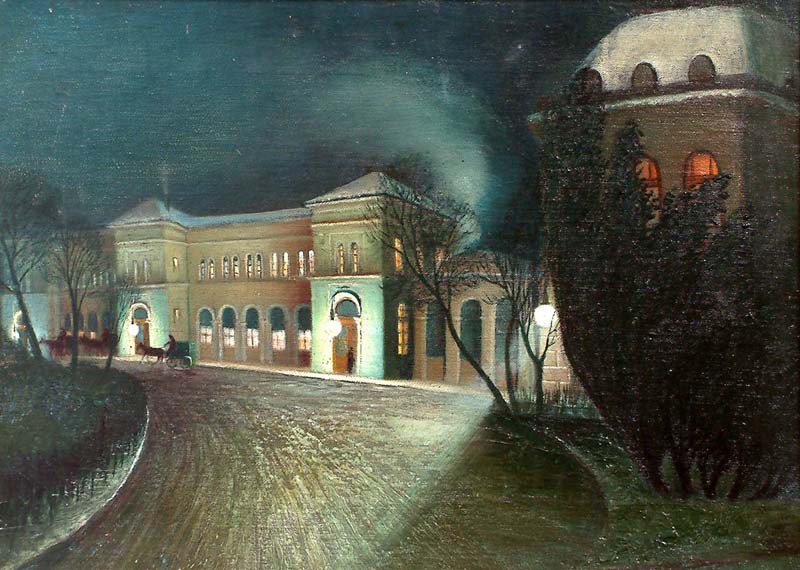
csontvc3a1ry-kosztka-tivadar-a-keleti-pc3a1lyaudvar-c3a9jjel-1902

6:20
Béla Viktor János Bartók: field recording

8:01
Béla Bartók: “Evening in Transylvania”
  Béla Bartók

11:10
Zoltan Kodaly: Cello Sonata, Op. 8 – 1. Allegro Maestoso Ma Appassionato
  Janos Starker

20:10
George Enescu: Violin Sonata No. 3, Op. 25 – 2. Andante Sostenuto E Misterioso
   Adelina Oprean (v) & Justin Oprean (p)

29:04
György Kosa: Trio for Flute, Viola and Cello, III. Allegro
  Tatjana Ruhland (f), Dirk Hageman (v), Fionn Bockemuhl (c)

haboruk-nyelve-mit-tudunk-a-bosnyakrol-1

32:35
Bartók: field recording

33:22
Bartók: String Quartet No. 3
  Takács Quartet

49:17
Pal Kadosa (1903-1983): 4 Caprichos, Op. 57; No. 3. Lento
  Pal Kadosa
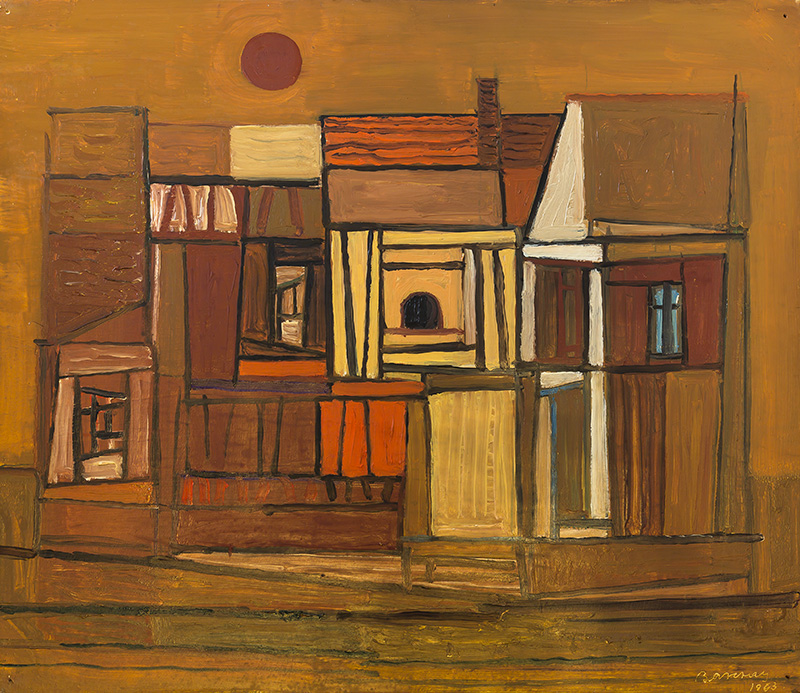
Jenő Barcsay Barcsay_Hazcsoport

51:21
Attila Bozay: Sonata for Cello and Piano, Op. 35; 1. Allegro con spirito
  Klara Wurtz or Imre Rohman (p) & Miklos Perenyi (c)

59:10
Kodaly: Intermezzo Allegretto for String Trio
  Domus

1:04:00
György Kurtág : Songs To Poems By Anna Akhmatov: Dirge for Alexander Blok’s Funeral
  Natalia Zagorinskaya w/ Asko I Schonberg Ensemble

1:07:35
Enescu – Piano Sonata No. 1 in F-sharp minor, Op. 24, I. Allegro molto moderato e grave
  Cristian Petrescu

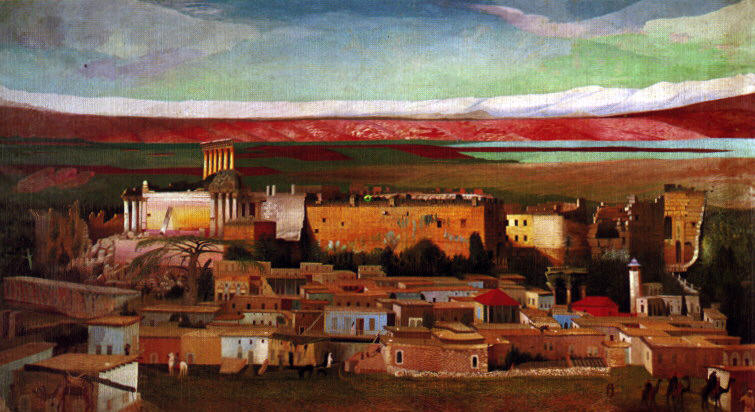
baalbek01 Tivadar Csontváry Kosztka

1:35:37
Kósa: Sacred Songs; No. 3. Husvét elott (Before Easter)
  Dirk Hegemann (viola), Lóránt Najbauer (baritone), Dániel Pataky (tenor)

1:44:00
Zsolt Durkó – Magyar rapszódia
  György Lehel: Budapesti Szimfonikus Zenekar

1:56:14
Bartók: field recording

1:56:43
Ligeti: Violin Concerto, II. Aria – Hoquet – Chorale
  Patricia Kopatchinskaja w/ Peter Eötvös: Frankfurt Radio Symphony

teljeskepmax Tivadar Csontváry Kosztka

2:04:10
Sándor Veress: Sonata for oboe, clarinet and bassoon (1931)
  members of the Albert Schweitzer Quintet

2:13:25
András Szőllősy: Tristia
  Péter Gazda · Franz Liszt Chamber Orchestra

2:25:04
Bartók: field recording

2:25:30
Farenc Farkas: Bihari Roman Tanocok
  Fides auf der Mar (clarinet) & Michiko Tsuda (p)

2:31:23
Bartók: Six Roumanian Dances, No. 3
  Zoltan Kocsis

Barcsay

2:32:43
Kodály: Háry János Suite, Op. 35A – Song
  Antal Doráti: Minneapolis Symphony Orchestra

2:38:17
Ligeti: String Quartet No. 2, III. Come Un Me
  Lasalle Quartet

2:42:17
Enescu: Octet, Op. 7 – 3. Lentement
  Gidon Kremer: Kremerata Baltica

CC Mixtape #19: A Lap Around the Caspian

:01:24
Kurmangazy Sagyrbayuly (KZ, 1823-96) Adai (arr. G. Uzembayeva for string quartet)
  Kazakh State String Quartet
        from Kazakh Classical Music: String Quartets (Divox, 2016)

:03:20
Sulkhan Tsintsadze (GA, 1925-1991): 12 Miniatures; Didavoi Nana
  Georgian State String Quartet
        from Shostakovich SQ 2 & 3; Tsintsadze Miniatures(Caprice, 2004)

:05:58
Tofik Kuliev (AZ, 1917-2000): Violin Concerto in A minor (1957), I.
  Mark Lubotsky w/ Yuri Temirkanov: USSR Radio & TV Large Orchestra
        from Solin – Concert Pieces/Zhiganov – Symphonic Songs/ Kuliyev – Violin Concerto
        (Russian Disc, 1994)

:16:38
Fikret Amirov (AZ 1922-1984): Symphony for String Orchestra, “To the Memory of Nisami”;      III. Andante molto sostenuto
  Uwe Berkermer: Caucasion Chamber Orchestra
        from Caucasion Impressions (Naxos, 2007)

:22:18
Franghiz Ali-Zadeh (AZ, 1947- ): Apsheron Quintet – 2. Reverse Time
  Kronos Quartet & Ali-Zadeh (p)
        from Mugam Sayagi – The Music Of Franghiz Ali-Zadeh (Nonesuch, 2005)

:29:41
Dmitri Yanov-Yanovsky (UZ, 1963- )): Lacrymosa (1991)
  E. Kichigina, soprano A. Tchernov, violin D. Kolobov, violin S. Dubov, viola I. Sitnikov, cello

:42:55
Gaziza Zhubanova (KZ, 1927- ): String Quartet No. 1; I. Allegro molto
  Kazakh State String Quartet
        from Kazakh Classical Music: String Quartets (Divox, 2016)

:47:37
Reza Vali (Iran, 1952- ): Kereshmeh (Calligraphy No. 8)
  Boston New Music Project
        from Book of Calligraphy (Albany, 2015)

:54:19
Kara Karayev (AZ, 1927- ): Violin Concerto, II.
  Janna Gandleman w/ Dmitry Yablonsky: Kiev Virtuosi
        from Karayev: Symphony No. 1 & Violin Concerto (Naxos, 2018)

:58:45
Faradzh Karaev (AZ, 1943- ): Vingt Ans Apres (Nostalgie No. 3)
  Valery Polyansky: Russian State Symphony Capella
        from Faradzh Karaev: Orchestral Works (Paladino, 2016)

1:07:31
Sulkhan Tsintsadze: 12 Miniatures – Spring
  Georgian State String Quartet
        from Shostakovich SQ 2 & 3; Tsintsadze Miniatures(Caprice, 2004)

1:11:18
Gaziza Zhubanova: String Quartet No. 2; I. Adagio misterioso
  Kazakh State String Quartet
        from Kazakh Classical Music: String Quartets (Divox, 2016)

1:23:02
Franghiz Ali-Zadeh: Mugam Sayagi
  Kronos Quartet
        from Mugam Sayagi – The Music Of Franghiz Ali-Zadeh